
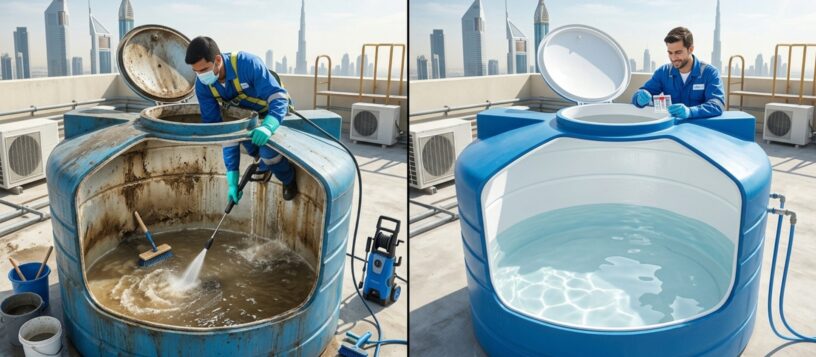
People often treat water tank cleaning and water tank disinfection as the same thing. They are not. One removes physical dirt and buildup. The other kills invisible bacteria and harmful microorganisms. Skipping either one puts our health at serious risk.
In the UAE, water tanks sit under intense heat, which accelerates bacterial growth and sediment buildup. Whether we manage a villa, apartment building, or commercial property, understanding the difference between these two processes is not optional. It is essential.
What Is Water Tank Cleaning?
Water tank cleaning is the physical process of removing all visible dirt, sludge, rust, algae, and sediment from the interior surfaces of our tank. Trained technicians drain the tank completely, then scrub every surface by hand or with specialized equipment. They remove all loose material, debris, and biological buildup that has settled at the bottom or clung to the walls.
This process targets what we can see and touch inside the tank. Without proper cleaning, layers of sludge accumulate over months. These layers trap harmful bacteria, block water flow sensors, and cause foul odors. No amount of chemical treatment can fix a tank that is physically dirty inside.
Key tasks involved in a professional water tank cleaning:
- Full drainage of all stored water before the process begins
- Manual scrubbing of walls, floor, and ceiling surfaces inside the tank
- Removal of sediment, rust flakes, algae, and visible biological matter
- Inspection of inlet and outlet pipes for blockages or corrosion
- Rinse all internal surfaces with clean water before the next stage
What Is Water Tank Disinfection?
Water tank disinfection is a chemical process that kills bacteria, viruses, and harmful microorganisms that remain invisible to the naked eye. After physical cleaning, technicians apply approved disinfectant solutions, typically chlorine-based compounds, across all internal surfaces. The disinfectant sits for a set contact time to destroy any remaining pathogens.
Disinfection addresses what cleaning alone cannot. Even after a thorough scrub, microscopic bacteria like Legionella and E. coli can survive on tank surfaces. These pathogens cause serious waterborne illnesses. Disinfection neutralizes them completely before the tank refills with fresh water.
Key steps involved in professional water tank disinfection:
- Application of approved chemical disinfectants to all tank surfaces
- Correct dilution ratios are maintained according to the UAE health authority standards
- Required contact time observed to ensure complete pathogen elimination
- Flushing of all treated surfaces with potable water after the contact period
- Final water quality testing to confirm safe residual chlorine levels
The Core Difference Between Cleaning and Disinfection
Many property owners believe that disinfection alone is enough. Others think that cleaning handles everything. Both assumptions are wrong.
Cleaning without disinfection leaves bacteria alive on scrubbed surfaces. Disinfection without cleaning means the chemical solution cannot reach pathogens hidden beneath layers of sludge and sediment. The dirt physically blocks the disinfectant from doing its job. We need both processes performed in the correct sequence to achieve a genuinely safe water supply.
Think of it this way. Cleaning removes the environment where bacteria live. Disinfection eliminates the bacteria themselves. One without the other leaves our water tank only half-treated and still unsafe for daily use.
Why Both Processes Are Non-Negotiable in the UAE
The UAE climate creates conditions that make water tank maintenance more critical here than in most other countries. Summer temperatures regularly exceed 45°C, and water stored in rooftop tanks can reach temperatures that actively encourage rapid bacterial growth.
Dubai Municipality and Abu Dhabi Public Health Centre both issue clear guidelines on the frequency of water tank cleaning and disinfection for residential and commercial properties. Non-compliance can result in penalties and, more seriously, in widespread illness among building occupants. Gulf Maintenance follows all local regulatory requirements and uses only approved materials and methods on every job.
Health Risks of Skipping Water Tank Cleaning
Neglected water tanks become breeding grounds for dangerous pathogens and chemical contaminants. The risks grow silently over time, and most people do not notice until someone in the household or building falls ill.
Common health risks from poorly maintained water tanks include:
- Legionella bacteria that cause Legionnaires’ disease, a severe form of pneumonia
- E. coli contamination is linked to gastrointestinal illness and food poisoning symptoms
- Cryptosporidium and Giardia parasites that cause persistent digestive problems
- Elevated levels of rust and heavy metals from corroded tank walls and pipes
- Algae toxins that cause skin irritation, nausea, and liver damage with prolonged exposure
Children, elderly individuals, and anyone with a weakened immune system face the highest risk from contaminated water. Professional water tank cleaning and disinfection is not a luxury. It is a basic health protection measure every property owner must take seriously.
How Often Should You Clean and Disinfect Your Water Tank?
The recommended schedule depends on our tank type, location, and usage level. Most health authorities in the UAE advise a minimum of twice per year for residential tanks and more frequently for commercial and high-usage properties.
Tanks located on rooftops under direct sunlight need more frequent attention than underground tanks. If we notice discolored water, unusual odors, reduced water pressure, or visible particles in our supply, do not wait for our scheduled service. Contact a professional immediately for an emergency water tank cleaning service.
Signs Our Water Tank Needs Immediate Attention
We should not wait for visible problems to book a service. By the time water quality issues become obvious, contamination is already serious. However, certain warning signs should prompt us to act without delay.
Warning signs that your water tank needs urgent cleaning or disinfection:
- Water has a strange smell, a metallic taste, or an unusual color
- Floating particles or visible sediment appear in the water supply
- Household members experience recurring stomach problems without another clear cause
- Water pressure has dropped noticeably without a supply issue from the main line
- The tank has not been professionally cleaned or treated in over six months
The Professional Water Tank Cleaning Process at Gulf Maintenance
Gulf Maintenance provides a complete water tank maintenance service that covers both cleaning and disinfection in a single visit. Our trained technicians follow a systematic, step-by-step process that meets all UAE regulatory standards and ensures our water supply is fully safe after every service.
The process begins with a full assessment of the tank condition, size, and access points. Technicians then drain all water from the tank and remove all visible debris, sludge, and biological buildup through manual scrubbing and specialized cleaning equipment. After the physical cleaning stage, the team applies approved disinfectant solutions and observes the required contact time. Finally, all surfaces receive a thorough flush, and water quality is tested before the tank refills.
Can You Perform Water Tank Cleaning Yourself?
Some property owners attempt to clean their water tanks without professional help. This approach carries significant risks and rarely produces a result that meets health safety standards.
Entering a water tank without proper safety equipment exposes workers to confined space hazards, oxygen-depleted environments, and toxic gases from bacterial activity. Using incorrect cleaning products or improper disinfectant concentrations can leave chemical residues in the water supply or fail to kill pathogens effectively. Without water quality testing equipment, there is no way to confirm the water is safe after a DIY attempt.
Professional services like Gulf Maintenance use trained technicians, certified equipment, and approved chemicals. They carry liability for the quality of their work and provide documentation that protects property owners from regulatory issues. DIY attempts offer none of these protections.
Choosing the Right Water Tank Maintenance Company in the UAE
Not all maintenance companies deliver the same quality of service. Choosing the wrong provider can leave our tank partially treated and our water supply still unsafe. There are specific qualities we should look for when selecting a professional for water tank cleaning and disinfection in Dubai or anywhere across the UAE.
What to look for in a water tank maintenance company:
- Valid trade license and approvals from the relevant UAE municipal authorities
- Technicians with confined space entry training and proper safety certifications
- Use of health authority-approved disinfectants at correct concentrations
- Provision of a written service report and water quality test results
- Transparent pricing with no hidden charges after the job is complete
- Verifiable customer reviews and a strong track record in the local market
Gulf Maintenance meets all of these criteria. We serve residential, commercial, and industrial clients across Dubai and the wider UAE with consistent professionalism and documented results.
The Role of Water Quality Testing After Service
Testing is the final and most important step in any water tank maintenance service. Without it, there is no objective confirmation that the cleaning and disinfection process was successful. Many companies skip this step, which leaves property owners with no proof of water safety.
At Gulf Maintenance, water quality testing is a standard part of every service. Technicians measure residual chlorine levels, pH balance, and turbidity at the end of each job. These readings confirm that the water inside the tank meets safe drinking water standards before the supply returns to normal use. Clients receive these results in writing as part of their service documentation.
How Water Tank Size and Material Affect Maintenance Needs
Water tanks come in various sizes and materials, including fiberglass, polyethylene, galvanized steel, and reinforced concrete. Each type has different maintenance requirements and different vulnerabilities to contamination and deterioration.
Galvanized steel tanks corrode over time, which introduces rust and heavy metals into the water supply. Fiberglass and polyethylene tanks resist corrosion but can develop biofilm on their inner surfaces if not cleaned regularly. Concrete tanks need careful inspection for cracks and surface deterioration that allow external contaminants to enter.
The size of the tank also affects the frequency and complexity of the cleaning process. Large commercial tanks require more time, more technicians, and more disinfectant to treat every surface properly. Gulf Maintenance assesses each tank individually and tailors the service to the specific material, size, and condition of the installation.
Water Tank Maintenance for Commercial Properties
Commercial properties carry a higher responsibility for water safety than residential buildings. Hotels, hospitals, schools, and food processing facilities serve large numbers of people who depend on clean water throughout the day. Contaminated water in a commercial setting can cause mass illness and carry serious legal and financial consequences for the property owner.
Gulf Maintenance works with commercial clients across Dubai and the UAE to establish regular maintenance schedules that comply with all applicable health and safety regulations. Our team understands the operational constraints of busy commercial properties and works around building schedules to minimize disruption.
Frequently Asked Questions
Q1: How is water tank cleaning different from water tank disinfection?
Water tank cleaning removes physical dirt, sediment, and biological buildup from inside the tank. Water tank disinfection kills bacteria and microorganisms using approved chemical solutions. Both processes are necessary for genuinely safe water. Cleaning prepares the surface. Disinfection neutralizes what remains.
Q2: How often should I schedule water tank cleaning and disinfection in the UAE?
Most UAE health authorities recommend a minimum of twice per year for residential tanks. Commercial properties with higher water usage should schedule more frequent services. Tanks exposed to direct sunlight or high temperatures may require additional attention between standard service intervals.
Q3: What happens if I only disinfect without cleaning first?
Disinfecting a dirty tank produces poor results. Sludge, sediment, and biological matter physically block the disinfectant from reaching bacteria on tank surfaces. The chemical cannot do its job effectively when organic material covers the surfaces. Always clean before disinfecting for reliable results.
Q4: Is the water safe to use immediately after tank disinfection?
Not immediately. Technicians must flush all treated surfaces with potable water and test the water quality before declaring the supply safe. Residual chlorine levels and pH readings must fall within safe ranges before the tank returns to normal use. Gulf Maintenance performs this testing as a standard part of every service.
Q5: Can bacteria grow back quickly after professional disinfection?
Without regular maintenance, bacterial growth can return within months, particularly in tanks exposed to high temperatures or contaminated source water. Sticking to a professional maintenance schedule prevents rapid recontamination and keeps our water supply consistently safe.
Final Thoughts: Clean Water Starts With the Right Maintenance
Water tank cleaning and disinfection are not competing services. They are two essential stages of the same process. Cleaning removes what we can see. Disinfection eliminates what we cannot. Together, they give us water that is genuinely safe for drinking, cooking, and daily use.
In the UAE, where heat accelerates bacterial growth and regulatory standards are rightly strict, professional water tank maintenance is a non-negotiable responsibility for every property owner. Gulf Maintenance delivers both services with trained technicians, approved materials, and documented results that protect our health and our compliance record.
Book our water tank cleaning and disinfection service with Gulf Maintenance today. Visit gulf-maintenance.ae and ensure our water supply meets the highest standards of safety and hygiene.
