
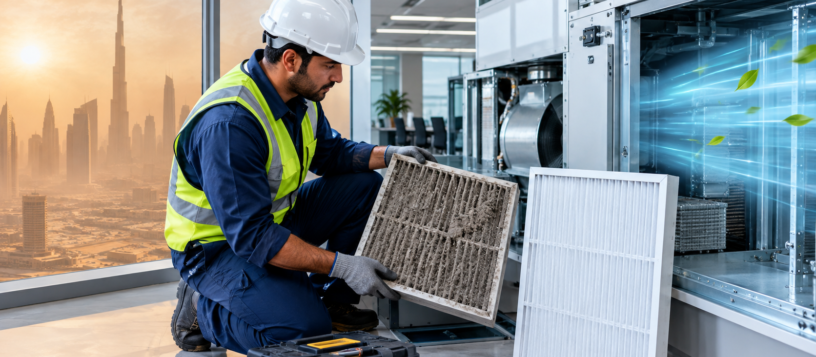
Any Dubai resident knows the weather wreaks havoc on mechanical things. The heat is brutal for months, and dust gets into every nook and cranny of a property, including the HVAC system. This combination takes a beating on filters, ducts, and outdoor units.
Filters and coils here are cleaner than in most other cities; dust settles inside faster. The heat makes AC units run nearly around the clock, which wears down parts sooner than expected. This in turn reduces the cooling efficiency and lifespan of the system.
HVAC maintenance in Dubai weather demands attention: property owners who stay on top of this usually avoid the bigger headaches. Regular inspections ensure the system is functioning properly, reduce wasted energy, and help to keep the air inside cleaner. Skip this, and a property often ends up with poor air quality, higher bills, and breakdowns just as the heat is at its peak.
How Dubai’s Climate Affects HVAC Systems
Most HVAC systems are not designed for the conditions in Dubai.
High heat and constant AC use
For much of the year, normal temperatures are over 40°C. Systems end up running 24/7 for weeks on end. Compressors and motors are the main sufferers and will wear out faster than they would in milder climates.
Dust and sand particles in HVAC systems
Living in a desert means there is always fine sand floating around somewhere. It is sucked into outdoor units and passes through vents. It comes in through small openings around doors and windows.
Increased workload for cooling systems
This translates into the system working harder to maintain comfortable indoor spaces during extended periods of high outdoor temperatures. That extra effort uses more electricity and puts stress on the internal parts.
Impact on System Efficiency and Lifetime
Heat and dust build up over time, and you end up with a system that is less efficient. Parts wear out sooner, cooling output is reduced, and the whole unit ages faster than it should.
5 Ways Dust and Heat Can Harm Your HVAC System
1. Dust Accumulation in Air Filters
Filters are supposed to catch dust before it spreads through the system, but Dubai throws more dust at them than most filters can handle for long. Once a filter is clogged, airflow drops, and the system has to work over time just to cool normally.
2. Less air moving through the HVAC system
Air just cannot pass through freely anymore as dust accumulates in filters, ducts, and vents. Some rooms are colder than others, and the whole place just feels uneven.
3. Decreased cooling efficiency
The heat transfer performance of the coated coils is deteriorated. The system takes longer to cool a room and sometimes never quite makes it, even running at full power.
4. More Energy Consumption
A struggling system pulls in more electricity trying to keep up. Most people see this in their bill long before they notice anything wrong with the unit itself.
5. Higher Wear and Tear on HVAC Components
Heat and dust combine to speed up the deterioration of motors, compressors, and fans. Some parts are designed to last for years, but they are failing after a much shorter period of time, leaving owners with unexpected repair bills.
Common Mistakes Made by Dubai Property Owners with HVAC Systems
Much of the HVAC damage in Dubai is due to small habits, not big ones. Some people wait too long to change filters. In this climate, dust collects more quickly, so filters need more attention than owners expect. Outdoor units are equally overlooked in the cleaning process. Sand falls on the outside coils and quietly drops off, cooling unnoticed until performance suffers.
Strange noises or weak airflow are often ignored for months at a time. A small problem can turn into a big repair by the time someone picks up the phone and asks for help. Another bad habit? Keeping the thermostat too low for long periods. It makes the system run constantly and puts an unnecessary strain on the system during the hottest months.
HVAC Problems and How They Affect Indoor Air Quality
When an HVAC system has issues,s it’s not just comfort that suffers. The air quality inside takes a bit of a hit too. When filters fail to trap dust particles properly, they get spread around the property. Allergens and pollutants gather in the ducts and are forced into living or working spaces.
Contaminants can slip past dirty filters and travel throughout the building. Dust builds up inside ducts and creates a breeding ground for bacteria and mold. Stale air gets trapped inside when there is poor ventilation, and the air quality is reduced overall.
Indicators of Bad Indoor Air Quality in Your Dubai Property
Catching warning signs early can save your health and your HVAC system. The first thing you normally see in a room is whether there is too much dust. If surfaces are collecting dust faster than they normally do, it could be a sign the HVAC system is moving dirty air around instead of cleaning it. A musty or bad smell usually means that there is mold, bacteria, or moisture trapped somewhere in the ductwork. You’re probably not going to get rid of those smells without a good cleaning.
Low airflow from vents often means filters or ducts are clogged. Even with the system running all day, the rooms feel warmer than they should. Rising humidity indoors means the system isn’t handling moisture correctly, which sets up the perfect environment for mold. The dirt you see around vents is a sign that dust is making its way into the room instead of being trapped where it belongs.
If you find your filters are clogging faster than normal, it could mean something in the environment, or ductwork is pushing more contaminants into the system than it’s supposed to be handling.
Why Regular HVAC Maintenance Matters in Dubai
The Real Benefits of Consistency for HVAC Maintenance Dubai Properties Need and the Results That Come Fairly Quickly. Air flows evenly throughout all the rooms without cold or warm spots. Improved cooling efficiency, meaning that the system reaches the desired temperature faster and maintains it even under maximum heat.
Indoor air is cleaner with fewer allergens, dust particles, and pollutants floating around. Energy efficiency increases, which lowers monthly bills. The system is no longer fighting through blockages. Fewer breakdowns mean fewer emergency repair costs and fewer interruptions to daily life or business. The system itself is more durable, which protects the investment and pushes back the need for a full replacement.
What is Included in Professional HVAC Maintenance?
A good maintenance visit will involve a number of checks designed to keep the system operating as it should. Starting with a complete inspection that detects issues early on, before they cost too much. Filters are checked and cleaned or replaced depending on the condition. Coils are cleaned to remove the buildup that blocks heat transfer and restore proper cooling. Ducts are checked for dust, leaks, or blockages that may reduce airflow.
Air is checked to make sure there is proper airflow between indoor and outdoor units. Thermostats are tested to make sure temperature readings are accurate. Airflow is measured in an effort to determine the effectiveness of the air circulation, and the entire system is evaluated for energy use efficiency and overall mechanical health.
The Cost of Neglecting HVAC Maintenance Dubai
“Maintenance is seldom less expensive if you delay it.
A small filter problem that is overlooked can result in a damaged coil or motor within a couple of months. Parts never checked are worn down by dust and heat, and repair bills rise fast. Electricity bills sneak up stealthily too. A system operating through dirty filters and coated coils uses a lot more power just to achieve the same result it used to.
Neglecting maintenance shortens the life of the entire system as well. Many owners find themselves having to replace units years ahead of time simply because small problems were left unattended for too long.
Dubai Weather Seasonal HVAC Care Tips
AC care in Dubai should never be something you think about when the AC stops cooling. Spring is a good time to have filters checked and cleaned before the heat turns on. Getting ahead of the summer means the system isn’t starting the season already behind.
During peak summer months, it’s more important than ever to keep an eye on airflow and unusual sounds as the system is under the most strain. Winter is a short break from the extreme heat, which is the perfect time for more thorough cleaning and inspection without the constant need for AC use.
The Impact of Not Maintaining HVAC on Property Value in Dubai
A poorly maintained HVAC can impact more than just a property’s comfort level.
Everyone knows how much the climate depends on reliable AC, so buyers and tenants in Dubai often check cooling systems closely before they agree to a deal. A system that shows signs of dust or poor performance during inspections can be a cause for concern. Old ductwork with years of dust build-up can be a sign of neglect to potential buyers, even if the rest of the property looks well-kept. Sometimes this will influence negotiations or valuation. Proper maintenance of HVAC systems is an investment in the long term value of the property as well as comfort and air quality.
How to Protect Your HVAC System from Dust and Heat in Dubai
- Regularly replace or clean filters to prevent dust buildup and maintain steady airflow.
- Have professional inspections conducted regularly all year round.
- Keep outdoor units clean and free of sand and debris.
- Check ducts for dust buildup periodically, as it could be affecting air quality.
- Make sure the ventilation is working properly so air keeps circulating as it should.
- Monitor indoor humidity to avoid conditions that could lead to mold.
- Don’t wait to fix things; little problems get worse fast in this kind of heat.
How often should you service HVAC systems in Dubai?
The rate of system attention depends strongly on the type of property and its use.
- Given the non-stop use and heat exposure h, homes do very well with professional servicing every three to four months.
- Generally, more people and constant use of the system in an office will need attention every two to three months to keep the air quality and cooling.
- Restaurants and commercial kitchens have to deal with extra grease and smoke on top of the heat, which makes monthly or bi-monthly servicing a practical necessity, not an option.
- Maintenance plans are often more relevant for larger commercial properties, where larger systems and ductwork typically need to be inspected more frequently.
- If you live near construction sites, unusual levels of dust exposure o, or heavy daily use, maintenance needs can be pushed up beyond the usual schedule.
How to Pick the Best HVAC Maintenance Service Provider in Dubai
Not every provider deals with Dubai’s climate in the same way. A good provider knows the local dust and heat conditions and modifies their approach, not some generic checklist designed for mild climates. They know what to look for in the filter coils and ducts that are specific to this environment.
“Experience in different types of property is also important. A provider that services both home offices and commercial kitchens understands that every space requires different types of maintenance.
Open communication helps as well. A reputable provider will explain findings in layman’s terms and offer practical solutions, not vague warnings that leave owners guessing.
When should you call in a professional HVAC maintenance Dubai?
Some warning signs mean you should call someone instead of waiting it out. If the AC is running all the time but not cooling correctly, there is likely a more serious problem with the unit. Unusual noises or odors coming from the unit are usually indicative of mechanical damage or contamination inside. Weak airflow from vents means blocked ducts or filters need to be addressed immediately.
If electricity bills keep increasing without a reason, the system might be working harder than it should. Especially frequent breakdowns in summer are a sign that there are problems that will not be solved by cleaning alone. If you find dust indoors that keeps returning even after you’ve cleaned, it usually means the system has stopped filtering the air as it should.
FAQs
What Impact Does Dubai Dust Have on HVAC Systems?
Dust can clog filters, coat coils, and reduce airflow through the system. This results in reduced cooling efficiency and mechanical component stress.
How frequently should HVAC filters be replaced in Dubai?
Depending on the property and how much the system is used, filters generally need to be cleaned or replaced every one to two months because of dust levels here.
Dirty HVAC Filter Impact on Indoor Air Quality?
Sure. Dirty filters allow dust, allergens, and pollutants to pass through rather than trap them, and thus directly reduce indoor air quality.
Does HVAC maintenance save energy?
Sure. A well-maintained system cools more efficiently, which means less energy is needed to reach and maintain the desired temperature.
How frequently should HVAC systems be serviced professionally in Dubai?
Most properties are okay with service every two to four months, although restaurants and commercial spaces tend to need more frequent service.
Conclusions
The heat and dust of Dubai do not make things easy on HVAC systems, and the effects over time are clogged filters, weaker cooling, and higher energy bills. These problems also spill over into the air quality inside a property if left unchecked.
The biggest difference is proper care that keeps you ahead of the problem. HVAC maintenance is the key to ensuring well-functioning systems, clean indoor air, and long-lasting equipment for Dubai properties. If your system is showing any of these warning signs, don’t wait for it to get any worse. Call Gulf Maintenance for a professional inspection designed around what Dubai’s climate actually demands.
