
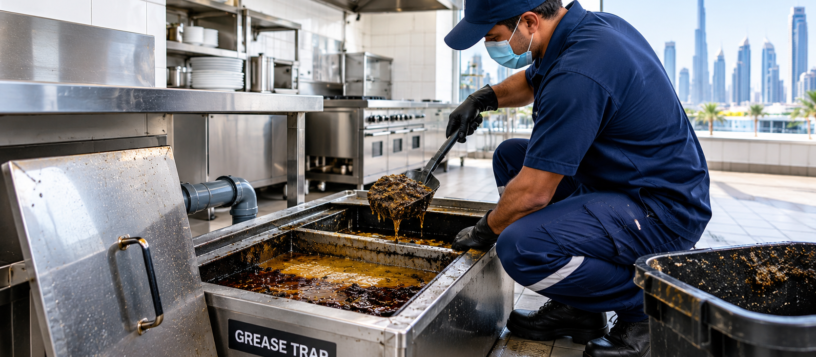
A grease trap rarely gets attention until something goes wrong. Then the kitchen smells, the sink drains slowly, and a busy service turns into a scramble.
Most Dubai restaurants, cafés, and cloud kitchens should clean their grease traps every one to three months. High-volume kitchens often need service every two to four weeks. The right interval depends on how much you cook, what you cook, and how large your trap is.
This guide explains how to plan grease trap cleaning Dubai kitchens can rely on. You will learn what affects the timing, how to spot trouble early, and what local rules expect from food businesses. You will also find advice on costs, common mistakes, and choosing a reliable provider.
What a Grease Trap Does in a Commercial Kitchen
Every kitchen sends fats, oils, and grease down the drain. Dishwashing, pot rinsing, and floor cleaning all carry it. Hot water keeps grease liquid, but once it cools inside the pipes, it hardens into a sticky mass. A grease trap stops that from happening. Wastewater enters the trap and slows down. Grease floats to the top, food solids sink to the bottom, and cleaner water flows on to the sewer line.
The trap only works while it has room. Once grease and sludge fill it, waste slips straight through, and the damage moves to your pipes and the public network. Commercial kitchen grease trap cleaning removes that stored waste and restores the trap’s capacity. Think of it as emptying a bin. Leave it too long and it overflows.
Types of Grease Traps and Why Size Matters
Small kitchens often use an under-sink trap. It holds only a few litres, so it fills fast and needs frequent attention. Larger kitchens use in-ground or outdoor interceptors. These tanks hold hundreds or thousands of litres and sit near the building’s drain line. They cope with heavy use but still need regular pumping.
Size sets the rhythm of your cleaning schedule. A small trap serving a busy grill fills in days. A large interceptor serving a modest café may last two months. Always match the schedule to the trap, not to a generic calendar.
The 25 Percent Rule and Standard Cleaning Frequency
The industry uses a simple benchmark for grease trap cleaning frequency. Clean the trap when grease and solids fill 25 percent of its liquid depth. Past that point, the trap loses its ability to separate waste properly.
Here is an example. If the liquid in your trap is 40 centimetres deep, you should clean it once the grease and sludge layer reaches 10 centimetres. Waiting longer lets waste escape into the outlet pipe.
Most commercial kitchens land somewhere between weekly and quarterly service. Regular grease trap cleaning Dubai operators schedule around this rule keeps kitchens compliant and drains clear. A technician can measure your trap’s fill rate over a few visits and set a timetable that fits your operation.
Factors That Decide How Often You Need Cleaning
No two kitchens produce the same amount of grease. Five factors shape your ideal schedule.
Kitchen Volume and Number of Covers
A restaurant serving 500 guests a day produces far more waste than one serving 80. More plates, more pots, and more dishwashing cycles all push grease into the trap faster.
Track your busiest days, not your average ones. Weekend brunch rushes and Friday nights often fill a trap quicker than the rest of the week combined.
Menu Type and Cooking Methods
Fried food, grilled meat, shawarma, biryani, curries, and creamy sauces all release heavy loads of fat. A juice bar or salad café releases very little.
Restaurants that deep-fry or roast in large quantities should sit at the short end of the scale. If your menu leans on oil, expect service every two to four weeks.
Trap Size and Design
A trap that is too small for your kitchen needs constant cleaning. An oversized trap gives you longer gaps between visits.
Old or damaged traps also perform poorly. Cracked baffles and worn seals let grease bypass the chamber, so the trap looks emptier than it works. Ask your technician to check the internal parts during each visit.
Dishwashing Habits and Kitchen Discipline
Staff habits make a big difference. Kitchens that scrape plates into the bin before washing send much less food waste into the trap. Kitchens that rinse oily pans straight into the sink fill their traps twice as fast.
Training your team costs little and stretches the time between services.
Dubai’s Climate and Seasonal Demand
Dubai’s heat speeds up the breakdown of trapped waste. Sludge turns foul quickly, and odours spread through kitchens and dining areas in summer.
Peak seasons matter too. Ramadan evenings, the winter tourist months, and major city events all push covers higher. Many operators add an extra cleaning before these periods to avoid problems during their busiest weeks.
Recommended Cleaning Schedules by Business Type
Use these ranges as a starting point, then adjust them after your first few inspections. Small cafés and bakeries produce moderate grease. Cleaning every six to eight weeks suits most of them, provided the trap is a fair size. For restaurant grease trap cleaning Dubai owners typically book service every four to six weeks. Kitchens with heavy frying or grilling should shorten that to every two to four weeks.
Fast-food outlets, shawarma shops, barbecue restaurants, and cloud kitchens work at high volume with oily menus. Two to four weeks is the safe interval for them. Hotels, catering companies, food courts, and staff canteens often need weekly service. Their traps handle constant flow from multiple kitchens and dishwashing stations. Under-sink traps need attention more often than large interceptors. Check them weekly and empty them as soon as they reach the limit.
Signs a Grease Trap Needs Cleaning
Waiting for a fixed date can backfire. Watch for these warning signs and book service the moment you notice them:
- Slow draining sinks: Water lingers in the basin or drains sluggishly after washing.
- Foul odours: A rotten, sour, or sulfur smell rises from floor drains or the trap area.
- Gurgling pipes: Bubbling sounds mean air is fighting through a partly blocked line.
- Visible grease buildup: A thick, hard layer sits on the surface when you open the lid.
- Water backing up: Wastewater rises in floor drains or sinks during peak service.
- Pest activity: Flies, cockroaches, and rodents gather around a neglected trap.
- Dark, dense sludge: The bottom layer feels heavy and blocks the outlet.
- Repeated plumbing calls: You keep paying for drain unblocking that never solves the root cause.
One sign may point to a minor problem. Two or more together mean the trap is overdue.
Dubai Rules and Compliance Requirements
Dubai Municipality expects food establishments to install grease interceptors and keep them working. Inspectors check the condition of traps during food safety visits, and a neglected trap can count against your inspection record. Only licensed contractors should collect and transport grease waste. They must take it to approved treatment or disposal sites. Pouring it into drains, manholes, or open ground breaks the rules and harms the sewer network.
Keep a service log. Record the date of each cleaning, the contractor’s name, and the disposal receipt. Inspectors often ask for these documents, and a tidy file shows you take compliance seriously. Some free zones, malls, and building managers add their own requirements on top of city rules. Requirements can also change, so confirm the current standards with Dubai Municipality or your licensed provider.
What Happens When You Skip Grease Trap Cleaning
Skipping service saves a small fee and costs much more later. A full trap sends grease into your pipes. It cools, hardens, and narrows the pipe until water can no longer pass. The result is a blocked line, and emergency drain repair costs far more than routine cleaning. Odours follow. Guests notice a smell before they notice the menu, and staff work in an unpleasant space. Pests arrive soon after.
Regulatory trouble is the biggest risk. Inspectors can issue fines, and repeated violations may lead to suspension of your trading license. A closed kitchen loses revenue every hour. Grease that reaches the public sewer also causes blockages that affect neighbouring businesses. That brings complaints, and sometimes liability, straight to your door.
Environmental Impact of Neglected Grease Traps
Grease does not stay where you put it. When a full trap lets fats escape, they travel through sewer lines and harden into large masses that restrict flow. Utilities call these blockages fatbergs, and crews spend days removing them. Sewage backups can then spill into streets, car parks, and drainage channels. That pollution harms the surrounding area and creates health risks for people nearby.
Treatment plants also struggle with excess fat. It coats equipment, raises operating costs, and reduces the quality of treated water. Proper cleaning keeps this waste out of the system. Licensed collectors take the grease to approved sites, and many facilities convert it into biofuel. Your routine service turns a problem into a resource, and it supports the city’s wider sustainability goals.
How Professional Grease Trap Cleaning Works
Knowing the process helps you judge whether a provider does the job properly. The technician starts by opening the trap and inspecting its condition. They measure the grease and sludge levels and check for leaks, cracks, or damage. Next, they pump out the contents using a vacuum truck. A proper service removes the floating grease, the wastewater, and the settled sludge. Skimming only the top layer does not count.
The technician then scrapes and cleans the walls, baffles, and lid. They check the inlet and outlet pipes for blockages and confirm that all seals close tightly. Finally, they refill the trap with clean water, close it, and take the waste to an approved disposal site. You should receive a report or receipt confirming the work.
Cost of Cleaning a Grease Trap in Dubai
Prices change from one kitchen to the next, so no single figure fits everyone. Several factors shape what you pay. Trap size comes first. A large in-ground interceptor takes more time, more equipment, and more disposal capacity than a small under-sink unit. Location and access matter too. A trap in a tight basement or a crowded mall service area costs more to reach than one beside an open loading bay.
Frequency also affects the price. Many providers offer better rates on regular contracts than on one-off visits. Emergency call-outs, especially at night or on weekends, usually carry a premium.
Compare quotes carefully. Ask what each visit includes, whether disposal fees sit in the price, and whether the provider issues receipts. A low quote that skips sludge removal or internal cleaning costs more in the long run, because the trap fills again within days.
Common Grease Trap Mistakes Kitchens Make
Even careful operators slip up. These mistakes cause most of the problems technicians see. Many kitchens wait for a smell before they book service. By then, the trap has usually passed its limit, and waste is already reaching the pipes. A fixed schedule prevents this.
Others pour hot water and dish soap down the drain to dissolve grease. It works for a moment, but the grease returns as it cools further down the line. Chemical drain cleaners and enzyme additives cause similar false comfort. They do not replace pumping.
Some businesses clean only the top layer of grease and leave the sludge behind. Others hire unlicensed collectors who dump waste illegally, which leaves the business exposed to fines.
Finally, many owners forget to log their services. Without records, you cannot prove compliance during an inspection, even when the trap works perfectly.
Grease Trap Maintenance Tips Between Services
Good habits between visits protect your investment. Strong grease trap maintenance for restaurants starts with the kitchen team, not the contractor. Scrape every plate and pan into the bin before washing. Fit sink strainers to catch food scraps. Never pour used cooking oil down the drain. Store it in a sealed container and hand it to a licensed oil collector.
Check the trap once a week. Lift the lid, look at the grease layer, and note the level in a log. This habit shows you how fast your trap fills and lets you book service before problems start. Train new staff during onboarding, and post a simple reminder near the sinks. Consistent grease trap maintenance Dubai kitchens follow also supports wider commercial kitchen maintenance Dubai inspectors expect, including exhaust cleaning and pest control.
What to Look for in Grease Trap Cleaning Dubai Providers
The right contractor makes compliance easy. The wrong one leaves you with paperwork problems and a trap that still overflows. Confirm that the company holds the required licenses and uses approved disposal sites. Ask to see proof. Reliable grease trap cleaning services Dubai businesses trust will provide receipts and service reports without hesitation.
Look for experience with kitchens like yours. A hotel needs a different plan than a small café. Ask whether the provider offers flexible schedules and emergency call-outs. The team at gulf-maintenance.ae works with restaurants, cafés, and commercial kitchens across Dubai, and it builds cleaning schedules around each kitchen’s trap size and menu.
Compare quotes on what each visit includes, not only on price. A clear scope, modern equipment, and trained technicians signal quality work. If you want a schedule matched to your kitchen, contact our team for a quote.
Frequently Asked Questions
1. How often should a restaurant clean its grease trap in Dubai?
Most restaurants need service every four to six weeks. Kitchens with heavy frying or grilling should book every two to four weeks. Clean the trap whenever grease and solids reach 25 percent of its liquid depth.
2. Can I clean my grease trap myself?
Small under-sink traps allow basic scraping and emptying by trained staff. Larger interceptors need a licensed contractor with pumping equipment. You also cannot dispose of the waste yourself, because approved sites accept it only from licensed collectors.
3. How much does grease trap cleaning cost in Dubai?
Prices vary with trap size, location, service frequency, and access. Ask several licensed providers for written quotes that list exactly what each visit covers.
4. Does a small café really need regular service?
Yes. A small trap fills quickly even when the menu is light, and inspectors expect every food business to keep its trap working. A six to eight week schedule suits many cafés.
5. How long does a professional cleaning take?
Small traps take around 30 minutes. Large interceptors can take a few hours, depending on the volume of waste and the trap’s condition. Most providers work outside peak service hours to avoid disrupting your kitchen.
Conclusion
The answer to how often a grease trap should be cleaned in Dubai is not the same for every kitchen. Most restaurants land between every two weeks and every three months. Busy, oil-heavy kitchens sit at the short end, and lighter operations sit at the long end.
Use the 25 percent rule as your guide. Watch for early warning signs, and adjust your schedule around Dubai’s peak seasons. Keep a service log, and hire a licensed provider who disposes of waste properly.
Consistent grease trap cleaning Dubai kitchens invest in preventing blocked drains, foul smells, pest problems, and fines. It also protects your reputation with guests and inspectors. Visit gulf-maintenance.ae to set up a schedule, and your kitchen will run smoother for years.
