
Running a food business in Dubai means more than cooking great meals. We must meet strict safety and hygiene standards set by local authorities. One of the most critical requirements is maintaining a clean kitchen exhaust system. Many operators overlook this until renewal time, and that mistake costs them heavily. Understanding kitchen exhaust system cleaning frequency helps us stay compliant, protect our staff, and keep our business running without interruption.
Dubai’s food industry grows every year. New restaurants, cafes, cloud kitchens, and catering companies enter the market constantly. With that growth comes tighter enforcement of kitchen safety standards. Authorities now inspect exhaust systems more carefully than ever before. Food operators who stay ahead of cleaning schedules avoid last-minute stress, failed inspections, and costly penalties. This guide gives us everything we need to manage our exhaust system the right way.
Why Kitchen Exhaust Cleaning Matters More Than You Think
Grease builds up inside exhaust ducts every single day. This buildup creates a serious fire hazard. Dubai Civil Defence and Dubai Municipality both inspect kitchen exhaust systems during food license renewals. A dirty or non-compliant system results in failed inspections, fines, or even forced closure.
Beyond fire risk, a dirty exhaust system affects air quality inside our kitchen. Chefs and kitchen staff breathe that air for hours. Poor air circulation increases heat levels, reduces equipment efficiency, and raises energy costs. Regular cleaning directly improves both safety and operational performance.
The Right Kitchen Exhaust System Cleaning Frequency for Every Operation
Not every kitchen needs cleaning on the same schedule. Dubai food safety guidelines and NFPA 96 standards both recommend frequency based on cooking volume and cooking type. Here is a clear breakdown:
High-Volume Kitchens – Monthly Cleaning
Restaurants, hotel kitchens, and fast food chains that operate 12 to 16 hours daily fall into the high-volume category. These kitchens produce heavy grease buildup quickly.
- Monthly cleaning keeps grease levels below dangerous thresholds
- Reduces fire risk in high-heat cooking environments
- Ensures continuous compliance for busy food establishments
Medium-Volume Kitchens – Quarterly Cleaning
Cafeterias, catering facilities, and mid-size restaurants with standard daily operations need cleaning every three months.
- Quarterly schedules balance cost with proper maintenance
- Prevents grease accumulation before it reaches hazardous levels
- Keeps exhaust fans and filters functioning at full capacity
Low-Volume Kitchens – Semi-Annual Cleaning
Small cafes, offices with pantry cooking, or seasonal food outlets typically qualify for cleaning every six months.
- Semi-annual cleaning suits kitchens with light daily usage
- Still meets minimum compliance standards in Dubai
- Reduces operating costs while maintaining safety
Charcoal or Wood-Fired Cooking – More Frequent Cleaning Required
Kitchens that use charcoal grills, wood-fired ovens, or solid fuel systems produce significantly more grease and carbon deposits.
- These kitchens often require monthly or bi-monthly cleaning
- Carbon residue poses a faster fire ignition risk than standard grease
- Dubai Civil Defence treats solid fuel kitchens as high-priority inspection sites
What Happens If You Skip the Cleaning Schedule
Many food operators delay exhaust cleaning to cut costs. This decision creates much larger problems down the line. Grease that collects inside ducts ignites easily under high heat. Kitchen fires that start inside exhaust ducts spread rapidly through the building. Insurance companies often reject fire damage claims if the exhaust system maintenance record is missing or outdated. Dubai Municipality inspectors check cleaning logs during renewal visits. Missing documentation alone can delay our license approval.
Beyond legal and financial consequences, a blocked exhaust system reduces airflow in our kitchen. Our cooking equipment works harder, consumes more energy, and breaks down sooner. Maintenance costs rise and kitchen efficiency drops.
The Link Between Exhaust Cleaning and Kitchen Fire Safety
Fire safety starts with a clean exhaust system. Grease inside ducts reaches ignition temperature faster than most operators realize. A single flame flash from a gas burner can travel into a grease-coated duct and trigger a full kitchen fire within seconds.
Dubai Civil Defence requires food businesses to maintain fire-safe kitchen environments at all times. Regular exhaust cleaning directly supports that requirement. It removes the primary fuel source for kitchen fires and keeps our fire suppression system working as designed.
How Dubai Authorities Inspect Your Exhaust System Before Renewal
Dubai Municipality and Dubai Civil Defence conduct physical inspections of commercial kitchen exhaust systems. Inspectors look for several specific things during these visits.
They check grease thickness inside the ducts using testing methods or visual inspection of access panels. Review the cleaning log and certification documents provided by our cleaning contractor. They test exhaust fan operation and measure airflow performance. They also check that the hood, filters, and ductwork show no visible damage or blockage.
If our system fails inspection, we receive a corrective action notice. We must fix the issue and pass re-inspection before our license renews. This delays our renewal and disrupts your business operations during peak seasons.
Common Mistakes Food Operators Make With Exhaust Maintenance
Many food businesses make the same avoidable mistakes year after year. Knowing these errors helps us stay ahead of them. Some operators only clean the visible hood surface and ignore the duct interior. Others hire uncertified cleaners who deliver no proper documentation. Many skip cleaning during busy seasons, thinking they will catch up later. Some rely on in-house staff to handle a job that requires professional equipment and training. All these mistakes lead to failed inspections, fire risks, and wasted money on emergency cleaning right before renewal.
Documents You Need to Show at Renewal Time
Proper documentation proves our kitchen exhaust system cleaning frequency meets required standards. Inspectors ask for these records every renewal cycle.
- Cleaning certificates issued by a certified exhaust cleaning company
- Date-stamped before and after photographs of the duct interior
- Grease thickness measurement reports for high-volume operations
- Service logs showing all previous cleaning dates and technician details
- Compliance certificates aligned with NFPA 96 or local Dubai standards
Gulf Maintenance provides all of these documents after every cleaning service. Our file stays complete and our renewal process moves forward without delays.
Signs Your Kitchen Exhaust System Needs Immediate Cleaning
We should not always wait for our scheduled cleaning date. Certain signs tell us that our exhaust system needs attention right away. Visible grease dripping from the hood or filters is a clear warning. Smoke inside the kitchen that does not clear properly signals blocked airflow. Unusual burning smells from the exhaust area mean grease is heating near combustion levels. Loud or struggling exhaust fans indicate airflow restriction caused by grease buildup. Any of these signs require us to call a professional cleaning team before the next scheduled date.
The Role of Exhaust Cleaning in Your Overall Kitchen Hygiene Plan
A clean exhaust system connects directly to our overall kitchen hygiene standards. Grease vapors that escape an unclean exhaust settle on surfaces, equipment, and food preparation areas. This creates contamination risks that affect food safety scores during Dubai Municipality inspections.
Exhaust cleaning should sit inside our broader hygiene maintenance plan alongside deep cleaning, pest control, and equipment servicing. When all these elements work together, our kitchen meets the highest hygiene standards Dubai requires.
The Professional Exhaust Cleaning Process Explained
Understanding what a professional cleaning covers helps us verify the quality of service we receive. A certified team follows a structured process from start to finish.
Pre-Cleaning Inspection
Technicians first inspect the entire system. They check the hood, filters, duct interior, exhaust fan, and external discharge points. This inspection identifies the level of grease buildup and any damaged components.
Degreasing and Manual Cleaning
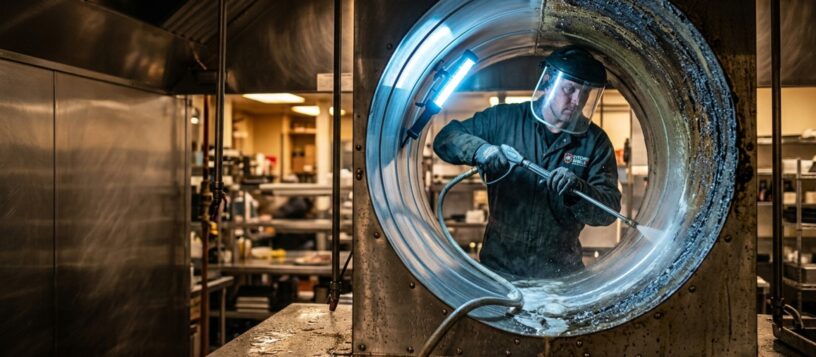
The team applies commercial-grade degreasers to all hood surfaces and duct interiors. They scrub manually to remove baked-on grease deposits that chemical solutions alone cannot dissolve. Filters go through a separate high-pressure wash process.
Duct Interior Cleaning
Technicians access the duct system through installed access panels. They clean all duct sections, bends, and vertical risers. Complete duct cleaning is the most important part of the process because this is where fire risk concentrates.
Fan and Motor Cleaning
The exhaust fan collects grease on its blades and motor housing. Technicians clean the fan thoroughly and check belt tension and motor function. A clean fan operates at full efficiency and extends equipment lifespan.
Post-Cleaning Documentation
After cleaning, the team photographs the interior ducts to show the clean condition. They record grease thickness readings and issue a signed cleaning certificate with all required details for our compliance file.
Why Cloud Kitchens in Dubai Need Extra Attention
Cloud kitchens operate at high cooking volumes in compact spaces. Multiple brands often share a single kitchen facility. This means exhaust systems carry grease loads from several concurrent cooking operations throughout the day.
These kitchens need more frequent cleaning than a standard single-brand restaurant. A monthly cleaning schedule fits most cloud kitchen operations. Operators who manage multiple brands under one roof must treat exhaust cleaning as a top-priority maintenance task, not an optional add-on.
How to Choose a Reliable Exhaust Cleaning Company in Dubai
Not every cleaning company meets Dubai’s compliance requirements. We need a professional team that understands local regulations and delivers verifiable results.
Look for a company registered with Dubai Municipality or approved by Dubai Civil Defence. Verify that technicians carry proper training certifications. Ask for sample cleaning certificates and documentation before we hire. Check that the company uses industry-standard degreasing equipment and follows NFPA 96 cleaning procedures.
Gulf Maintenance serves food operators across Dubai with certified exhaust cleaning services. The team delivers full documentation, trained technicians, and scheduled service reminders so our renewal stays on track every year.
Planning Your Annual Exhaust Cleaning Calendar
Smart food operators plan their exhaust cleaning calendar at the start of each year. This approach eliminates last-minute rush bookings before renewal deadlines and keeps costs predictable.
Start by identifying your kitchen’s cooking volume and type. Use the frequency guidelines above to determine how many cleanings us need annually. Schedule those dates in advance with your cleaning contractor. Build a reminder system so nothing gets missed during busy seasons.
If our license renews in a specific month, schedule our final cleaning at least four to six weeks before that date. This gives time for documentation processing and allows a re-cleaning if the inspector identifies any issues.
What to Expect During Your First Professional Exhaust Cleaning
If we have never hired a professional exhaust cleaning team before, the first service visit covers more ground than routine maintenance visits. Technicians handle years of accumulated grease in some cases.
The first clean takes longer and may reveal underlying issues like damaged access panels, worn fan belts, or blocked discharge points. A reliable company flags these issues and recommends repairs alongside the cleaning. After the first professional service, our system starts fresh and future maintenance becomes faster and more straightforward.
The Cost of Professional Exhaust Cleaning vs. The Cost of Non-Compliance
Some operators hesitate to invest in regular professional cleaning. The comparison of costs makes the decision straightforward. Professional exhaust cleaning in Dubai costs a fraction of the fines or business closure losses that result from failed inspections. A single failed renewal costs us weeks of operational disruption, re-inspection fees, and potential legal penalties. A kitchen fire caused by grease buildup causes damage that no business recovers from easily. Regular kitchen exhaust system cleaning frequency management is not an expense. It is an investment that protects our license, our property, and our people.
FAQs About Kitchen Exhaust System Cleaning in Dubai
Q1: How often should a restaurant kitchen exhaust system be cleaned in Dubai?
High-volume restaurants operating daily should clean their exhaust systems every month. Medium-volume operations should clean quarterly. Low-volume kitchens require cleaning every six months. Our cooking type and daily hours determine the right schedule.
Q2: Does Dubai Municipality require exhaust cleaning certificates for license renewal?
Yes. Dubai Municipality inspectors check cleaning certificates and service logs during commercial kitchen inspections. Missing documentation can delay or block our license renewal.
Q3: What standard do exhaust cleaning companies follow in Dubai?
Most certified companies in Dubai follow NFPA 96 standards, which cover commercial cooking operations and exhaust system maintenance. Dubai Civil Defence references these standards during inspections.
Q4: Can I clean the kitchen exhaust system myself?
Surface filter cleaning can be done in-house. However, full duct interior cleaning requires professional equipment and trained technicians. Only certified professional cleaning qualifies for compliance documentation.
Q5: What happens if grease builds up inside the exhaust ducts?
Accumulated grease inside ducts creates a serious fire hazard. It restricts airflow, forces exhaust fans to overwork, and can ignite under high cooking temperatures. Regular professional cleaning eliminates this risk and keeps our kitchen safe.
Conclusion
Every food operator in Dubai carries the responsibility of maintaining a safe and compliant kitchen environment. Kitchen exhaust system cleaning frequency is not a technicality; it is a core part of running a responsible food business. The right cleaning schedule protects our staff from fire hazards, keeps our kitchen air clean, and ensures our license renewal moves forward without complications.
Dubai authorities take exhaust system compliance seriously. Inspectors check documentation, measure grease levels, and verify fan performance during every renewal cycle. Operators who stay on schedule with certified professional cleaning never face these inspections with uncertainty.
Gulf Maintenance helps food businesses across Dubai maintain fully compliant exhaust systems with certified cleaning services, complete documentation, and reliable scheduling. Contact the team today and make sure our kitchen is ready before our next renewal date.
