
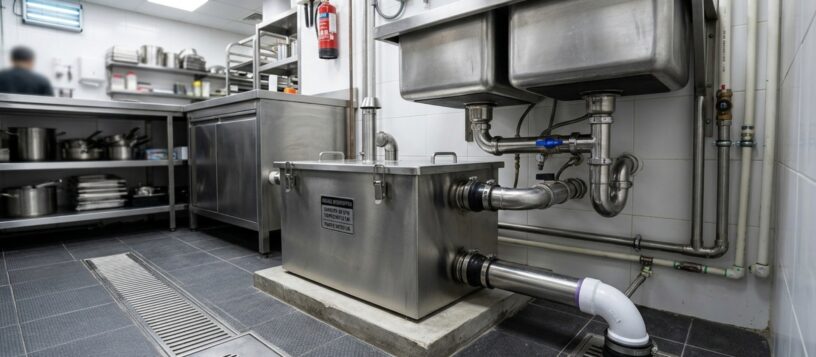
Opening a restaurant in Dubai involves more than menus and staffing decisions. Every food business connected to the municipal drainage system must meet strict wastewater rules first. Among these rules, grease trap installation Dubai requirements often get overlooked during early planning. Owners who skip this step frequently face delayed approvals or costly retrofits after construction is already complete.
Dubai Municipality treats grease management as a public health and infrastructure issue. Untreated fats and oils clog city sewer lines and create serious sanitation hazards over time. A grease trap acts as the first line of defense inside any commercial kitchen. It captures waste before it ever reaches the public drainage network.This guide walks new restaurant owners through everything needed to achieve full compliance, from sizing calculations to ongoing maintenance schedules.
Why Grease Trap Installation Matters for New Restaurants
Commercial kitchens produce wastewater loaded with cooking oils, fats, and food particles. Without treatment, this waste solidifies inside pipes and municipal sewer lines. Blocked drainage systems lead to overflow, foul odors, and expensive emergency repairs. These problems affect both the restaurant and the surrounding building. Dubai Municipality requires every food service establishment to install a grease interceptor before connecting to the sewer network. This applies to restaurants, cafes, hotels, and catering kitchens alike.
Health inspectors verify this equipment during licensing. Building management also typically requires proof of installation before granting fit-out approval. Beyond regulatory compliance, a properly installed unit protects daily kitchen operations. It reduces foul smells, prevents slow drains, and extends the life of plumbing infrastructure.
Dubai Municipality Regulations Governing Grease Traps
Dubai Municipality’s Food Safety Department oversees grease trap standards for commercial kitchens. These rules define installation, sizing, and placement requirements in detail.
Mandatory Installation Before Sewer Connection
No commercial kitchen can connect its wastewater outlet directly to the public sewer without a functioning grease interceptor. MEP contractors must include this equipment in the approved drainage design. Inspectors check this detail closely during the fit-out permit stage. Improper connections remain a leading cause of rejected applications.
Sizing Based on Kitchen Output
Grease trap capacity depends on seating capacity, menu type, and daily meal volume. A small café needs a far smaller unit than a full-service restaurant frying food throughout the day. Contractors calculate the correct size using peak wastewater discharge estimates. Guesswork often leads to units that fail within months.
Material and Construction Standards
Approved grease traps must use corrosion-resistant materials, typically stainless steel or reinforced concrete. Units also need accessible lids for regular cleaning and inspection.
Baffles inside the unit must separate grease from wastewater effectively. Substandard materials or poorly sealed units are a common reason for failed inspections.
Placement and Accessibility Requirements
Regulations require grease traps to sit in locations that allow easy cleaning access. Underground units need surface-level covers, while above-ground models must stay unobstructed.
Poor placement decisions made during fit-out often force restaurants into expensive relocation work later.
Steps to Achieve Grease Trap Installation Dubai Compliance
New restaurant owners avoid delays by following a clear, sequential process rather than treating compliance as an afterthought.
- Engage a licensed MEP consultant early to calculate the correct grease trap size for our kitchen layout.
- Submit drainage plans that include the grease trap specification alongside our overall fit-out application.
- Choose a certified supplier experienced in commercial-grade grease interceptor installation for Dubai restaurants.
- Position the unit according to municipal accessibility guidelines for cleaning crews.
- Schedule a pre-opening inspection to confirm the installed unit matches approved plans.
- Arrange a recurring cleaning contract before opening day, since most permits require ongoing maintenance proof.
- Keep installation certificates and inspection reports on file for future municipal visits.
Following this sequence keeps our restaurant’s opening timeline on track and avoids last-minute rejections.
Grease Trap Approval Timeline During Restaurant Fit-Out
Understanding the approval timeline early prevents delays that push back our restaurant’s opening date. Municipality approval for grease trap installation follows a fairly predictable sequence, and each stage carries its own requirements.
Design and Consultation Stage
This stage begins once our MEP consultant reviews the kitchen layout. The consultant calculates grease trap size based on expected output and includes it in the drainage design submitted for fit-out approval. Most consultants finish this stage within a few days, provided the kitchen layout is already finalized. Menu or seating changes after this point often require recalculation.
Municipal Submission and Review Stage
Once the drainage design is ready, it goes to Dubai Municipality alongside the broader fit-out application. Straightforward applications typically clear within one to two weeks. Applications with incomplete documentation or non-standard specifications face longer review periods. Submitting accurate paperwork the first time avoids unnecessary back-and-forth with reviewers.
Installation and Site Inspection Stage
After approval, the contractor installs the grease trap according to the approved plans. A municipal inspector then visits the site to confirm the installed unit matches the submitted specification. This inspection usually happens shortly before final fit-out approval. Any mismatch between the installed unit and approved plans adds days or weeks to the timeline.
Final Approval and Sign-Off Stage
Once the inspector confirms compliance, the municipality issues final sign-off for the drainage system. This sign-off becomes part of the overall fit-out completion certificate required before opening. Owners who plan grease trap installation early, rather than treating it as a late addition, generally move through this entire timeline without major setbacks.
Choosing the Right Grease Trap Size and Type
Restaurant kitchens vary widely in output. No single grease trap size fits every operation. Under-sink units suit small cafes and takeaway counters with limited frying activity. These compact models fit beneath sinks but need frequent cleaning due to smaller capacity. Mid-sized in-ground traps suit standard restaurants with moderate cooking volume. They balance space efficiency with adequate holding capacity.
Large-scale interceptors serve high-volume kitchens, hotels, and catering operations. These units, often installed outside the building, handle significant daily wastewater output. Consulting an experienced grease trap installation Dubai provider before finalizing kitchen design prevents costly sizing mistakes.
Cost Factors Involved in Grease Trap Installation
Installation costs vary based on several practical factors that owners should plan for early. Unit size remains the biggest driver, since larger interceptors cost more to purchase and install. Material choice also affects pricing. Stainless steel units generally cost more upfront than concrete alternatives but often last longer with less maintenance.
Location within the building matters too. Units requiring excavation or underground placement typically involve higher labor costs than above-ground models. Ongoing maintenance contracts add a recurring cost beyond the initial installation. Budgeting for this early prevents financial surprises after opening.
Common Mistakes New Restaurant Owners Make
Many first-time owners underestimate the planning grease management requires. Finalizing kitchen layouts before consulting a drainage specialist often forces awkward retrofits later.Selecting a unit based purely on price, rather than suitability, creates another common problem. Cheaper, undersized traps clog faster and generate persistent odor complaints.
Some owners assume installation alone satisfies municipal requirements. In reality, inspectors also verify ongoing cleaning schedules during license renewal. Delaying municipal submission until construction nears completion creates further complications. Drainage modifications become far more expensive once flooring and fixtures are in place.
How Grease Trap Installation Affects our DEWA and Municipality Approvals
Grease trap compliance does not exist in isolation from our other approvals. Dubai Electricity and Water Authority and Dubai Municipality both review drainage details as part of the broader connection and licensing process.DEWA typically requires confirmation that wastewater discharge meets acceptable standards before finalizing utility connections. A missing or non-compliant grease trap can delay this confirmation, which in turn holds up our overall utility setup.
Municipality food safety approval also depends on this same drainage compliance. Restaurants cannot receive final health and safety clearance if the grease management system remains incomplete or unverified. Because these approvals overlap, a problem with grease trap compliance often creates delays across multiple departments at once, not just one.
Signs Our Grease Trap Is Undersized for Our Kitchen
An undersized grease trap creates ongoing operational problems long after installation. Recognizing the warning signs early helps owners fix the issue before it affects daily service. Frequent bad odors near the kitchen drain area often signal that the unit fills faster than expected. Slow-draining sinks during peak service hours point to a trap struggling with wastewater volume.
Needing pump-out service more often than our provider originally recommended is another clear indicator. If our menu or seating capacity has grown since installation, the original sizing may no longer match our current output.
Maintenance Requirements After Installation
Installing a compliant grease trap satisfies only the first part of Dubai’s regulatory expectations. Ongoing maintenance forms an equally important obligation. Dubai Municipality typically requires documented cleaning at regular intervals. Frequency depends on kitchen size and grease output. High-volume kitchens often need weekly or biweekly servicing. Smaller operations may qualify for monthly schedules instead.
Licensed waste management companies pump out accumulated grease and issue service certificates. Restaurants must retain these records for inspection purposes. Neglecting this schedule leads to reduced efficiency, unpleasant odors, and eventual blockages that can disrupt kitchen operations entirely.
Working With Licensed Grease Trap Service Providers
Partnering with an experienced, licensed provider simplifies the entire compliance journey. A qualified grease trap installation Dubai company understands current sizing formulas and inspection expectations. Licensed providers also handle waste disposal according to environmental standards. This protects our business from liability tied to improper handling.
Many established providers offer combined installation and maintenance packages. This gives owners a single point of contact for both setup and recurring service needs. Choosing a provider with proven restaurant industry experience, rather than a general plumbing contractor, often results in smoother approvals.
How to Select a Reliable Grease Trap Contractor in Dubai
Choosing the right contractor affects both installation quality and how smoothly our municipal approval process goes. A few key checks help us avoid costly mistakes later.
- Confirm the contractor holds proper licensing and registration to operate in Dubai’s commercial food sector.
- Ask specifically about restaurant project experience, since general plumbing work does not always cover grease trap specifications.
- Request references from other restaurant clients to verify their track record with municipal approvals.
- Check whether they stay updated on current Dubai Municipality sizing and material standards.
- Ask if they offer combined installation and maintenance packages for long-term convenience.
- Compare quotes from at least two or three contractors before making a final decision.
- Confirm response times for emergency service, since blocked traps need fast attention.
Frequently Asked Questions
Is grease trap installation mandatory for all restaurants in Dubai?
Yes, Dubai Municipality requires every commercial kitchen connecting to the public sewer to install a grease interceptor before operations begin.
How is grease trap size determined for a new restaurant?
Sizing depends on seating capacity, menu type, and estimated daily wastewater output, calculated by a qualified MEP consultant.
How often does a grease trap need cleaning in Dubai?
Cleaning frequency varies by kitchen volume, but most restaurants require weekly, biweekly, or monthly servicing to remain compliant.
Can a restaurant open without completing grease trap installation?
No, municipal inspectors typically withhold final approval until the unit is installed, inspected, and verified against submitted plans.
Who is responsible for grease trap maintenance after installation?
Restaurant owners must arrange ongoing servicing through a licensed waste management provider and retain maintenance records for inspection.
Conclusion
Grease trap installation Dubai requirements exist to protect the city’s infrastructure and public health. Owners who treat this as a core part of fit-out planning, rather than a late addition, avoid costly delays and disruptions after opening. From understanding the approval timeline to spotting the signs of an undersized unit, each step covered in this guide supports smooth compliance and long-term operational stability. Selecting a reliable contractor and staying consistent with maintenance schedules protects both our license and our kitchen’s daily performance.
If we are opening a new restaurant in Dubai and need expert help with grease trap installation, sizing, or ongoing maintenance, Gulf Maintenance offers experienced support tailored to commercial kitchens across the city. Partnering with a trusted provider like Gulf Maintenance gives restaurant owners confidence that their grease management system meets every regulatory expectation from day one.
