
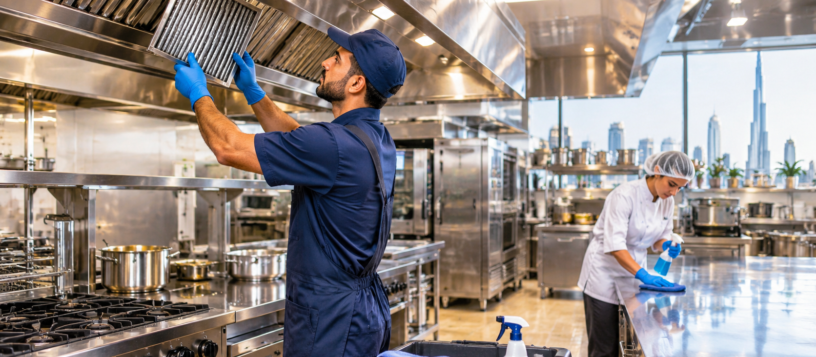
Dubai restaurants need more than menu planning and staff scheduling to prepare for Ramadan. Changes in operating hours, customer demand, and food preparation routines can place additional pressure on commercial kitchen equipment. Exhaust systems, grease traps, drainage lines, and food preparation areas all need attention before the busy period begins.
A practical Ramadan kitchen maintenance checklist for Dubai restaurant owners can help identify maintenance problems before they interrupt daily operations. It also gives kitchen managers a clear way to organise inspections, cleaning tasks, and equipment checks.
Preparation should begin several weeks before Ramadan. Restaurants that already follow regular commercial kitchen maintenance and cleaning practices can use this period to review their existing schedules and address any outstanding issues. A well-planned Ramadan kitchen maintenance checklist Dubai businesses can apply should cover ventilation, grease removal, sanitization, food hygiene, and ongoing maintenance.
Ramadan kitchen maintenance checklist Dubai: What Restaurants Should Prepare Before Ramadan 2027
Ramadan changes the way many restaurants operate. Some businesses adjust their opening hours, prepare large quantities of food before sunset, and experience concentrated customer demand during Iftar. Others continue serving customers throughout the day while managing different preparation schedules.
These changes affect kitchen equipment and cleaning routines. Cooking stations may operate for longer periods during specific hours, while preparation teams handle larger quantities of ingredients in shorter timeframes. Without proper planning, minor maintenance issues can quickly become operational problems.
Consider a restaurant that prepares hundreds of meals for Iftar. Its fryers, grills, extraction systems, and preparation surfaces may experience heavier use than usual. If the exhaust filters already contain grease or the drainage system has restricted flow, the increased workload can make these problems more noticeable.
Preparing early gives restaurant managers time to inspect equipment, arrange necessary cleaning, and organise staff responsibilities. It also reduces the pressure of arranging emergency maintenance during peak operating hours.
For businesses planning Ramadan restaurant preparation, early maintenance should focus on three important areas:
- Kitchen ventilation: Check whether exhaust hoods, filters, ducts and fans remove smoke, heat and grease effectively.
- Grease management: Inspect grease traps, drainage connections and waste collection points.
- Food hygiene: Review cleaning procedures for preparation surfaces, equipment, storage areas and frequently touched objects.
These checks should form part of a wider restaurant kitchen maintenance Dubai plan rather than becoming one-time activities.
How Ramadan Changes Restaurant Kitchen Operations
Restaurant operations often become more concentrated during Ramadan. Many customers prefer dining after sunset, which can create a short but demanding service period. Kitchens must prepare ingredients, organise cooking stations and coordinate staff before customers arrive.
This can increase pressure on ventilation and drainage systems. Fryers, grills and ovens may operate simultaneously, producing more heat, smoke and airborne grease. Dishwashing areas can also handle a higher volume of utensils, trays and cookware.
Restaurants that offer takeaway, delivery and catering services may face additional preparation demands. Food packaging, storage and dispatch activities require separate work areas and organised cleaning routines.
Kitchen managers should review their normal schedules and identify where adjustments are necessary. For example, filter cleaning may need to take place after a busy service instead of following the usual weekly routine. Floor cleaning and waste removal may also require additional attention.
A planned schedule helps prevent cleaning activities from interfering with food preparation. It also allows supervisors to assign responsibilities clearly across different shifts.
Inspecting Commercial Kitchen Exhaust Systems Before Ramadan
The exhaust system is one of the most important parts of a commercial kitchen. It removes heat, smoke, steam, and grease particles produced during cooking. A poorly maintained system can affect ventilation, increase fire risk,s and make working conditions uncomfortable.
Restaurants should inspect their complete ventilation system before Ramadan rather than focusing only on the visible hood.
Checking the Exhaust Hood and Grease Filters
The exhaust hood captures airborne grease and directs cooking fumes towards the ventilation system. Over time, grease collects on its internal and external surfaces.
Kitchen managers should inspect the hood for sticky residue, damaged sections, loose fittings, gs and signs of grease leakage. The hood should remain free from excessive deposits that could interfere with its operation.
Grease filters also require regular attention. Their purpose is to capture grease particles before they enter the ductwork.
During an inspection, check for:
- Heavy grease deposits on filter surfaces.
- Bent or damaged filter frames.
- Blocked openings that restrict airflow.
- Poorly fitted filters that allow grease to bypass them.
- Grease dripping from the hood or filter housing.
Removable filters should be cleaned according to the manufacturer’s instructions and the kitchen’s cooking volume. A heavily used restaurant may require more frequent cleaning than a small café.
Inspecting Exhaust Ducts and Extraction Fans
Cleaning the visible hood does not mean the entire ventilation system is clean. Grease can travel further into the ductwork and collect on internal surfaces.
Duct inspections should identify accumulated grease, restricted sections, damaged access panels, and possible leakage points. Technicians should also check whether access openings allow proper inspection and cleaning.
Extraction fans require attention because grease deposits can collect on fan blades and surrounding components. Excessive buildup can affect fan balance and airflow. Unusual vibration, noise, or reduced extraction performance may indicate a maintenance issue.
A complete commercial kitchen exhaust cleaning service should consider the hood, filters, ducts,s and extraction fan rather than treating each visible component separately.
For further information, restaurant managers can review the existing commercial kitchen exhaust cleaning requirements in Dubai.
Why Grease Buildup Creates Kitchen Safety Problems
Grease is a normal by-product of commercial cooking, but allowing it to accumulate creates avoidable risks. Frying, grilling, ng and roasting release grease particles that can settle inside ventilation systems and on nearby surfaces.
Grease deposits inside exhaust ducts are particularly concerning because they are combustible. If a cooking fire reaches accumulated deposits, flames can spread through the ventilation network.
Heavy buildup can also restrict airflow. When extraction becomes less effective, heat and cooking fumes remain in the kitchen for longer. This can make the environment uncomfortable for employees and affect the performance of the ventilation system.
Restaurants should not rely on visual inspections of the hood alone. Grease may accumulate inside ducts and around fan components even when the visible surfaces appear reasonably clean.
A planned Ramadan kitchen maintenance checklist Dubai restaurant managers use should therefore include inspection of the full exhaust system, cleaning records, and follow-up checks.
Cleaning frequency depends on cooking methods, equipment usage, and grease production. Restaurants with heavy frying, grilling, or barbecue operations generally need more frequent attention than kitchens with lighter cooking activity.
Grease Trap Inspection and Maintenance Before Ramadan
Grease traps prevent fats, oils, and grease from entering drainage systems in excessive quantities. They separate grease from wastewater before the water moves into the connected drainage network.
During normal restaurant operations, grease, food particles, and other waste gradually collect inside the unit. If the trap does not receive regular attention, its capacity to separate grease can decrease.
During Ramadan, increased food preparation and dishwashing may add more grease and wastewater to the system. Restaurants should inspect their traps before the busy period begins.
Common Grease Trap Problems and Warning Signs
A grease trap does not always show obvious signs of failure immediately. However, certain problems can indicate that cleaning or maintenance is necessary.
Watch for the following warning signs:
- Slow drainage: Water takes longer than usual to leave sinks and washing areas.
- Persistent unpleasant smells: Strong odours develop near drainage points or the grease trap.
- Frequent blockages: Kitchen drains become blocked repeatedly despite routine cleaning.
- Visible grease accumulation: A thick layer of grease and food solids collects inside the unit.
- Water backing up: Wastewater returns through sinks or floor drains.
- Overflow around the trap: Wastewater escapes from the unit or connected pipes.
These signs should not be ignored. A blocked grease trap can interrupt dishwashing, affect kitchen hygiene, and create unpleasant working conditions.
Restaurants should also review the trap’s condition, lid, seals, inlet and outlet connections. Damaged components may allow wastewater or grease to escape.
How to Clean and Maintain a Commercial Grease Trap
Grease trap cleaning involves removing accumulated grease, food particles, and wastewater from the unit. The exact process depends on its design, size, and condition.
A suitable maintenance procedure generally includes:
- Inspect the trap and identify the level of accumulated grease and solids.
- Open the unit carefully using appropriate protective equipment.
- Remove collected grease and solid waste using suitable equipment.
- Clean internal surfaces and accessible components.
- Check the inlet, outlet,t and internal baffles for damage or blockage.
- Confirm that wastewater flows through the unit correctly.
- Dispose of collected waste through an appropriate waste management process.
- Record the cleaning date and any maintenance issues identified.
Restaurants should avoid pouring hot cooking oil, leftover sauces, or large food particles into sinks. These materials increase the amount of waste entering the drainage system.
A regular grease trap cleaning and maintenance service can help restaurants manage accumulated waste and identify problems before they cause drainage interruptions.
Kitchen managers can also consult this guide on how often grease traps should be cleaned in Dubai.
The appropriate cleaning interval depends on trap capacity, menu type, cooking volume,e and the amount of grease produced. A fixed schedule should be based on actual operating conditions rather than assumptions.
Commercial Kitchen Sanitization and Food Hygiene During Ramadan
Cleaning and sanitization are closely connected, but they serve different purposes. Cleaning removes visible food residue, grease, dirt, and other contaminants from surfaces. Sanitization reduces microorganisms on suitable surfaces to an acceptable level when the correct product and procedure are used.
Both activities are important in commercial kitchens, especially when food preparation increases during Ramadan.
A restaurant may have clean-looking preparation counters but still have hygiene problems if employees use contaminated cloths, handle raw and cooked food with the same equipment,t or skip sanitizing steps.
An effective Ramadan kitchen maintenance checklist Dubai restaurant teams follow should include both routine cleaning and appropriate sanitization procedures.
Cleaning Food Preparation Surfaces and Equipment
Food preparation surfaces require attention throughout every shift. Cutting boards, worktables, knives, food containers, and preparation equipment can transfer contamination between ingredients if employees do not follow proper cleaning procedures.
Kitchen teams should separate raw meat, seafood, vegetables, and ready-to-eat food wherever possible. Dedicated equipment and clearly identified preparation areas can reduce the chance of cross-contamination.
A suitable cleaning routine should include:
- Removing food waste and visible dirt from preparation surfaces.
- Washing equipment with an appropriate cleaning solution.
- Rinsing surfaces when required by the product instructions.
- Applying an approved food-contact surface sanitiser.
- Following the required contact time.
- Allowing surfaces to air-dry when the product instructions require it.
Employees should never mix different cleaning chemicals. Some combinations can produce dangerous fumes or reduce the effectiveness of the products.
Floors, Drains and High-Touch Areas
Kitchen floors collect food particles, grease, water, and cleaning residue. These materials can create slipping hazards and attract pests if staff do not remove them regularly.
Floor cleaning should focus on cooking stations, dishwashing areas, storage spaces,s and routes used for food movement. Drain covers should also remain clean and free from accumulated waste.
High-touch areas need frequent attention because multiple employees may use them throughout a shift. These include:
- Refrigerator and freezer handles.
- Door handles and push plates.
- Equipment control panels.
- Tap handles and sink controls.
- Storage cabinet handles.
- Shared utensils and frequently handled tools.
Cleaning cloths and equipment should be separated according to their intended use. A cloth used for floors or drains should never be used on food preparation surfaces.
Restaurants should also follow the instructions on sanitizing products, including dilution, contact time, and suitability for food-contact areas.
Creating a Pre-Ramadan and Ongoing Kitchen Maintenance Schedule
A maintenance schedule gives restaurant managers a practical way to organise work without disrupting daily operations. It should cover tasks that require attention before Ramadan as well as activities that continue throughout the month.
The Ramadan kitchen maintenance checklist Dubai operators develop should reflect their kitchen size, equipment, menu, and expected service volume.
A useful approach is to divide maintenance into three stages.
Four to six weeks before Ramadan
Review existing cleaning records and identify outstanding maintenance issues. Arrange inspections of exhaust ducts, fans, grease traps, and drainage connections. Check refrigeration equipment, cooking appliances and preparation stations.
One to two weeks before Ramadan
Complete planned deep cleaning and address problems found during inspections. Confirm that grease filters are clean, waste disposal arrangements are working,g and cleaning materials are available. Review staff responsibilities and update shift-based cleaning instructions.
During Ramadan
Continue daily cleaning and scheduled maintenance. Monitor grease accumulation, drainage performance, ventilation, and food preparation hygiene. Record any unusual equipment behaviour and arrange repairs when required.
The following routine can help kitchen managers assign responsibilities:
| Frequency | Recommended maintenance tasks |
| Every shift | Clean preparation surfaces, remove food waste and check floors |
| Daily | Clean cooking equipment, inspect visible grease and sanitise high-touch areas |
| Weekly | Inspect filters, drains, storage areas and cleaning equipment |
| Monthly or as required | Review grease trap condition and schedule appropriate servicing |
| According to usage and inspection | Arrange complete exhaust system cleaning and equipment maintenance |
These intervals are planning suggestions, not universal regulatory requirements. Actual frequencies should follow equipment instructions, applicable local requirements, and the kitchen’s operating conditions.
Common Kitchen Maintenance Mistakes to Avoid During Ramadan
Busy service periods can make restaurant teams focus more on food preparation than preventive maintenance. However, small oversights can create larger problems when kitchen equipment is operating under pressure.
A practical Ramadan kitchen maintenance checklist Dubai managers use should help prevent these common mistakes:
- Cleaning only visible exhaust surfaces: Grease inside ducts and around extraction fans also requires attention.
- Ignoring early drainage problems: Slow sinks and recurring blockages can indicate grease trap issues.
- Using the wrong chemicals: Unsuitable products may damage surfaces or leave unsafe residues.
- Skipping cleaning records: Without documentation, managers cannot easily confirm when maintenance was completed.
- Mixing raw and ready-to-eat food areas: Poor separation increases cross-contamination risks.
- Delaying equipment repairs: Unusual noises, weak extraction, and leaks should be investigated promptly.
- Overlooking staff responsibilities: Every shift should have clearly assigned cleaning and inspection duties.
Preventive maintenance works best when responsibilities are clear, and tasks are recorded. Managers should review these records regularly rather than assuming that every task has been completed.
When Restaurants Should Arrange Professional Maintenance Support
Routine cleaning by restaurant employees is essential, but some maintenance tasks require specialist equipment, technical knowledge, and suitable safety procedures.
For example, staff can clean removable grease filters as part of their normal duties. However, cleaning deep inside exhaust ducts or servicing extraction fans may require trained technicians.
The same applies to grease traps that contain large quantities of accumulated waste, show signs of damage, or repeatedly cause drainage problems.
Restaurants should consider professional support when:
- Grease is accumulating inside inaccessible duct sections.
- Smoke and cooking fumes are not being extracted effectively.
- Exhaust fans produce unusual vibration or noise.
- Grease traps repeatedly overflow or block.
- Persistent odours remain after routine cleaning.
- Equipment requires inspection or repairs beyond the team’s training.
- A documented cleaning or maintenance report is needed for internal records.
Professional cleaning should complement daily kitchen hygiene procedures, not replace them.
Restaurant managers should check the scope of work before arranging a service. For exhaust cleaning, confirm whether the hood, filters, ducts,s and fans are included. For grease trap maintenance, ask whether waste removal, internal cleaning, and condition checks are covered.
Gulf Maintenance provides information about its kitchen exhaust, grease trap, and sanitization services through its maintenance services page. Restaurants can use this information when reviewing the maintenance support required for their kitchens.
Frequently Asked Questions
How early should restaurants prepare their kitchens for Ramadan 2027?
Restaurants should ideally begin reviewing their maintenance requirements four to six weeks before Ramadan. This allows enough time to inspect ventilation systems, clean grease traps, arrange deep cleaning, and address equipment problems without unnecessary pressure.
How often should commercial kitchen exhaust systems be cleaned?
Cleaning frequency depends on cooking volume and the amount of grease produced. Heavy-use kitchens with fryers and grills may require more frequent professional cleaning than cafés or kitchens with lighter cooking operations. Follow the applicable maintenance requirements and inspection findings.
Why should grease traps be inspected before Ramadan?
Grease traps collect fats, oils, and food waste from kitchen wastewater. Inspecting them before Ramadan helps identify accumulated waste, blockages, and damaged components before increased food preparation places additional pressure on drainage systems.
What should a restaurant include in its Ramadan kitchen cleaning checklist?
The checklist should cover exhaust hoods, grease filters, ducts, extraction fans, grease traps, cooking equipment, food preparation surfaces, floors, drains, storage areas, and high-touch points. It should also include cleaning schedules and staff responsibilities.
How can restaurants maintain kitchen hygiene during busy Ramadan hours?
Restaurants should assign cleaning responsibilities to each shift, clean food-contact surfaces between tasks, separate raw and cooked food preparation, remove waste regularly, and maintain appropriate handwashing procedures. Supervisors should check that cleaning activities are completed throughout service.
What are the warning signs of a blocked grease trap?
Common signs include slow-draining sinks, unpleasant smells, recurring drain blockages, wastewater backing up, and visible grease accumulation inside the trap. These problems require inspection and appropriate cleaning.
When should restaurants arrange professional kitchen cleaning?
Professional cleaning may be necessary when grease accumulates inside exhaust ducts, extraction performance decreases, grease traps repeatedly block, or routine cleaning cannot address the problem. Restaurants should also arrange maintenance when equipment needs specialist inspection or repair.
Conclusion
Preparing a commercial kitchen before Ramadan 2027 requires attention to ventilation, grease management,t and food hygiene. Restaurants should inspect exhaust hoods, filters, ducts and fans, clean grease traps before they become overloaded and maintain consistent sanitization procedures throughout the month.
A well-organised Ramadan kitchen maintenance checklist for Dubai restaurants helps managers identify potential problems, assign responsibilities, and maintain safer working conditions during busy service periods.
Gulf Maintenance provides kitchen exhaust, grease trap,p and sanitization information through gulf-maintenance.ae. Restaurant owners and kitchen managers can review the relevant services and arrange an assessment to identify their maintenance requirements before Ramadan begins.
