
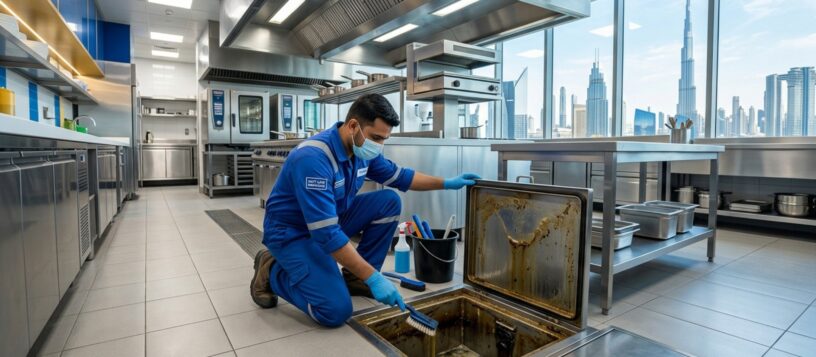
Running a restaurant in Dubai comes with serious responsibilities. We manage food quality, staff performance, customer experience, and kitchen hygiene all at once. But one critical task that many restaurant owners overlook is grease trap cleaning. A grease trap works silently behind the scenes every single day. It catches fats, oils, and grease before they enter the main drainage system. When we ignore it, the consequences hit hard: blocked drains, foul odors, failed inspections, and costly repairs. Gulf Maintenance helps Dubai restaurants stay ahead of this problem with professional grease trap cleaning services that keep kitchens running without interruption.
Dubai Municipality enforces strict hygiene and drainage standards across all food service businesses. Restaurants that fail to maintain their grease traps face fines, inspection failures, and potential business shutdowns. Knowing exactly how often we need grease trap cleaning and acting on that schedule protects our restaurant, our customers, and our operating license.
What Is a Grease Trap and How Does It Work?
A grease trap is a plumbing interception device installed between our kitchen drainage system and the municipal sewer line. Every time hot water carries fats, oils, or grease from our sinks, dishwashers, or cooking equipment, it flows into the grease trap first. Inside the trap, grease floats to the surface, solid food particles settle to the bottom, and cleaner water exits through the outlet pipe into the sewer.
This process protects our entire drainage network from grease accumulation. Without a functioning grease trap, melted fats cool inside our pipes and harden into thick, stubborn blockages. These blockages restrict water flow, create unhygienic conditions, and eventually require expensive emergency plumbing work. In Dubai’s commercial kitchens, where cooking runs for long hours at high volume, grease accumulates rapidly. A properly maintained grease trap handles this load. A neglected one turns into a serious liability.
How Often Should Restaurants Clean Their Grease Trap in Dubai?
The correct cleaning frequency depends on our kitchen’s size, cooking volume, and cuisine type. Most commercial restaurants in Dubai need grease trap cleaning every one to three months. High-volume kitchens, fast food outlets, hotel restaurants, and large cafeterias need cleaning every two to four weeks. Lighter operations with smaller cooking loads can be managed with quarterly cleaning.
The standard professional guideline is the 25% Rule. When accumulated grease and solids reach 25% of our grease trap’s total capacity, we must clean it immediately. Waiting beyond this point causes overflow, drainage failure, and regulatory violations. Dubai Municipality inspectors apply this standard during routine restaurant inspections. Staying within this threshold at all times keeps our kitchen compliant and our drainage system functional.
Key Factors That Affect Your Cleaning Schedule
Daily Cooking Volume
A kitchen serving 400 covers per day pushes significantly more grease into the trap than one serving 80 customers. High-output kitchens with multiple fryers, grills, and heavy sauté stations generate grease at a faster rate. These kitchens reach the 25% threshold much sooner and require more frequent cleaning to stay within safe limits.
Cuisine Type and Grease Output
The food we cook determines how much grease our trap collects. Here is a practical breakdown:
- High-grease output: Fast food, fried chicken, Arabic grills, and American-style burgers produce the heaviest grease load and need cleaning every 2 to 4 weeks.
- Medium-grease output: Indian, Chinese, and mixed grill cuisines generate moderate grease and typically need cleaning every 4 to 6 weeks.
- Low-grease output: Salad bars, juice cafes, and light breakfast menus produce minimal grease and can manage with monthly or quarterly cleaning.
Grease Trap Size Relative to Kitchen Output
An undersized grease trap fills up faster and demands more frequent cleaning. A properly sized trap matched to our kitchen’s daily output extends the gap between cleaning visits. If our trap fills within days of a cleaning, it likely needs an upgrade in capacity rather than just more frequent service.
Kitchen Operating Hours
A restaurant open 20 hours a day generates far more grease than one operating a standard lunch-and-dinner shift. Hotel kitchens, hospital cafeterias, and airport food outlets run continuously. Extended operating hours compress the timeline between cleanings significantly. These facilities should maintain a bi-weekly or monthly cleaning schedule at minimum.
Warning Signs Our Grease Trap Needs Cleaning Now
Slow drainage from our kitchen sinks is one of the first signs our grease trap is nearing capacity. Grease and solids partially block the outlet pipe, reducing water flow noticeably. A strong rotten egg smell rising from your floor drains means trapped waste is decomposing inside a full grease trap. This odor spreads into the dining area quickly and alerts both customers and inspectors.
Water backing up into sinks or floor drains signals a complete overflow situation. When our trap has no more room, wastewater pushes back through inlet pipes and surfaces through our kitchen drains. This creates an immediate hygiene violation. If we open the trap cover and see grease floating near the surface, the trap is full. Professional vacuum cleaning must happen immediately at this stage to prevent further drainage damage.
The Professional Grease Trap Cleaning Process
Professional grease trap cleaning is not a simple flush-and-rinse job. It follows a structured process that removes all accumulated waste completely and safely. Trained technicians arrive with vacuum tanker trucks and high-pressure cleaning equipment. They remove the trap cover and use industrial vacuum equipment to pump out all liquid waste, floating grease, and settled solids from the trap.
After pumping, technicians scrape the interior walls to remove hardened grease deposits that cling to the surfaces. High-pressure water then flushes out remaining particles from inside the trap and connected pipes. The inlet and outlet pipes receive inspection for blockages or structural damage. The entire service takes one to three hours depending on trap size and grease accumulation level.
Dubai Municipality Regulations on Grease Trap Cleaning
Dubai takes food safety and environmental compliance extremely seriously. Dubai Municipality has clear regulations that govern how commercial kitchens must manage their waste, including grease trap maintenance. Failure to follow these regulations results in heavy fines, forced closures, and license suspensions.
According to local health and safety standards, all commercial food establishments must maintain their grease traps in a clean and functional condition at all times. Inspectors from Dubai Municipality conduct surprise visits to restaurants across the emirate. If they find an overflowing, unmaintained, or non-functional grease trap, the consequences are immediate and severe.
Beyond financial penalties, a failed inspection can result in a temporary closure order. For any restaurant in Dubai, even a few days of forced closure causes significant revenue loss and long-term damage to customer trust and brand image.
Cleaning Frequency by Restaurant Type
Fast Food and Fried Food Outlets
Fryers run at full capacity all day in fast food kitchens. Batter particles, cooking oil, and food solids enter the grease trap in large volumes every hour. These restaurants need grease trap cleaning every two to four weeks. Even a short delay beyond this window risks overflow in high-fryer operations.
Hotel and Fine Dining Restaurants
Hotel kitchens prepare complex dishes involving butter, rich sauces, and high-fat proteins around the clock. Monthly cleaning works for average hotel kitchens, but peak periods Ramadan, National Day, and the winter tourist season, increase grease output substantially. Extra cleaning visits during these months prevent unexpected problems.
Corporate Cafeterias and Staff Canteens
Large cafeterias serving 500 or more meals daily push significant grease volume through the trap every week. Monthly cleaning is the baseline for these facilities. Operations serving higher meal counts should consider bi-weekly service to stay within the 25% threshold at all times.
Cloud Kitchens
Dubai’s cloud kitchen sector has expanded rapidly. A single facility often runs five to ten virtual brands from one shared kitchen. Combined grease output from multiple brand operations reaches very high levels quickly. Cloud kitchen operators need grease trap cleaning every two to three weeks to manage this combined load effectively.
Consequences of Skipping Grease Trap Cleaning
Grease overflowing from a full trap solidifies inside our drainage pipes. Removing hardened grease from pipe walls costs far more than routine cleaning. In serious cases, pipes require full replacement, a completely avoidable outcome with a proper maintenance schedule in place.
Dubai Municipality actively inspects restaurant kitchens and drainage systems. A grease trap filled beyond the legal threshold results in an immediate violation notice. Repeated violations lead to significant fines and suspension of our food license. Beyond regulatory risk, decomposing grease inside a neglected trap attracts cockroaches, rodents, and drain flies. Once a pest infestation begins, controlling it costs far more than maintaining a clean trap from the start. Dubai also enforces environmental protection standards that penalize restaurants releasing excess grease into the municipal sewer system. Regular cleaning keeps our discharge within legal limits and protects us from environmental enforcement action.
Recommended Cleaning Schedule at a Glance
Every restaurant benefits from a cleaning schedule matched to its actual operation. Here is a practical reference based on kitchen type and daily output:
- Fast food and fried food outlets Every 2 to 4 weeks
- Hotel kitchens and fine dining Every 4 to 6 weeks
- Cloud kitchens running multiple brands Every 2 to 3 weeks
- Corporate cafeterias serving 500+ meals Every 2 to 4 weeks
- Staff canteens and hospital kitchens Every 4 to 6 weeks
- Cafes and light-menu restaurants Every 6 to 8 weeks
These figures serve as starting points. Our actual schedule depends on trap size, cuisine type, and real grease output. A professional site assessment gives us a precise frequency recommendation for our specific kitchen.
How Dubai Municipality Regulates Grease Trap Maintenance for Restaurants
Dubai Municipality treats grease trap maintenance as a strict legal obligation for every food service business in the city. Inspectors from the Food Safety Department conduct routine kitchen visits and check grease trap conditions directly during each inspection. They apply the 25% Rule as their standard measurement any trap where grease and solids exceed 25% of total capacity counts as an immediate violation. Restaurants that ignore the notice face escalating fines, food license suspension, and forced closure until they meet full compliance.
Dubai Municipality also requires restaurants to keep proper maintenance records from every professional cleaning visit. Inspectors review these records on the spot. A restaurant with no documentation cannot prove compliance even if the trap looks clean on inspection day. Maintaining accurate service records protects your business from penalties and keeps every inspection moving smoothly.
FAQs About Grease Trap Cleaning in Dubai
How often should restaurants clean their grease trap in Dubai?
Most commercial restaurants need cleaning every one to three months. High-volume kitchens with fryers and grills need cleaning every two to four weeks. The 25% Rule applies to clean the trap before grease and solids reach 25% of its total capacity.
What happens if a restaurant skips grease trap cleaning?
Blocked drains, water backups, foul odors, pest infestations, failed health inspections, and Dubai Municipality fines all follow from skipped cleaning. Repeated violations put our food license and business operation at serious risk.
Does Dubai Municipality require documentation for grease trap cleaning?
Yes. Inspectors check maintenance records during routine restaurant visits. A professional cleaning company provides a service report after each visit. This report serves as our compliance documentation during inspections.
How long does professional grease trap cleaning take?
The process takes one to three hours depending on trap size and the amount of grease accumulated. Professional teams schedule visits during off-peak kitchen hours to minimize disruption to our operations.
How do I know when my grease trap needs immediate cleaning?
Slow kitchen drains, strong rotten odors from floor drains, water backing up into sinks, and visible grease floating near the trap surface all indicate that cleaning is urgently needed.
Conclusion
Grease trap cleaning is not optional for any restaurant operating in Dubai. It is a legal requirement, a hygiene standard, and a practical necessity that protects our entire kitchen drainage system. Cleaning our grease trap on the right schedule prevents blocked pipes, eliminates foul odors, keeps pests away, and ensures we pass every Dubai Municipality inspection without issue. The cost of regular maintenance is always lower than the cost of emergency repairs, fines, or forced closures.
Gulf Maintenance provides professional grease trap cleaning services across Dubai for restaurants, hotels, cafeterias, cloud kitchens, and all types of commercial food service operations. The team uses industrial vacuum tankers and high-pressure equipment to deliver thorough, compliant cleaning with zero disruption to our kitchen schedule. Every service comes with full documentation accepted by Dubai Municipality inspectors.
