
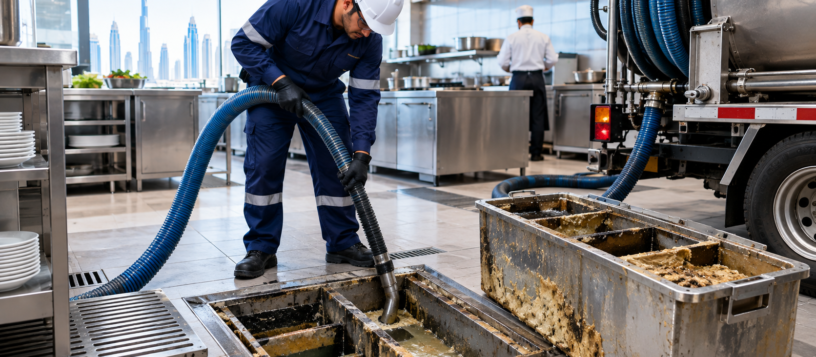
Every commercial kitchen in Dubai produces grease. It builds up in the trap every day, and sooner or later someone has to pay to remove it. Owners often ask what that bill will look like before they book a service.
The honest answer is that it depends. Two kitchens on the same street can pay very different amounts for the same job. This guide explains what drives grease trap cleaning costs in Dubai, so you can read a quote with confidence and spot where you can save.
How Much Does Grease Trap Cleaning Cost in Dubai?
No single price fits every kitchen. A fixed rate would ignore trap size, buildup, and access, and those details decide the final figure. Any company that quotes a flat number without asking about your setup is guessing.
Think of the price as a result of your kitchen’s conditions rather than a fixed tariff. Once you know which conditions matter, you can predict your own range far better.
Why Grease Trap Cleaning Prices Vary
Providers price the job around the work involved. A small trap under a cafe sink takes less time, less equipment, and less disposal capacity than a large interceptor serving a hotel kitchen.
Other costs sit behind the visit itself. Crews, vehicles, suction equipment, and licensed waste disposal all add to what the provider spends. Each company also sets its own margins and service standards, which explains why quotes differ even for similar jobs.
Factors to Check Before Requesting a Quote
Gather a few details before you call. A provider can quote accurately only when you describe your setup clearly.
Note the trap type and approximate capacity, the number of meals your kitchen serves each day, and where the trap sits. Mention the date of the last cleaning and any slow drains or odours. Share photos if you can. These details help the provider send the right crew and avoid surprise charges on the day.
6 Factors That Affect Grease Trap Cleaning Cost
Six factors shape most quotes. Understanding them shows you why your bill looks the way it does and which levers you control.
Grease Trap Size and Capacity
Larger traps hold more grease and water, so they take longer to empty and clean. They also produce more waste to transport and dispose of.
A compact under-sink unit and a large in-ground interceptor sit at opposite ends of the pricing range. Always confirm your trap’s capacity when you request a quote.
Amount of Grease and Food Waste Buildup
A trap packed with hardened grease and food solids demands more labour than one cleaned on schedule. Crews must break up the layers, scrape the walls, and clear the baffles.
Neglect raises the price. A trap that sits untouched for months turns a routine job into a heavy one, and the quote reflects the extra effort.
Accessibility and Trap Location
Location changes the workload. A trap near a service door gives the crew easy access for hoses and equipment. A trap buried in a basement, behind a kitchen line, or under a tight floor hatch slows everything down.
Long hose runs, narrow routes, and restricted working hours push the cost up. Tell the provider about access limits at the start.
Cleaning Frequency and Kitchen Usage
A busy fast-food kitchen sends far more grease into the trap than a small coffee shop. Heavy frying, high meal counts,s and long opening hours all raise the load.
Frequency affects the price of each visit as well as the yearly total. Regular visits keep each cleaning light, while rare visits make each one heavier.
Standard Cleaning vs Emergency Service
Planned visits fit into the provider’s schedule. Emergency calls do not. A backed-up trap during dinner service forces the company to reroute a crew immediately, and urgent work usually costs more.
Late-night and weekend callouts often add further charges. A maintenance schedule removes most emergencies before they start.
Waste Disposal and Additional Service Requirements
Removed grease cannot go down a drain or into general waste. It needs proper handling and licensed disposal, and the provider factors that cost into the quote.
Extra requests change the price too. Jetting of connected pipes, camera inspection, odour treatment, and documentation for audits all add work. Ask which of these the quote covers.
Grease Trap Cleaning Cost for Different Types of Businesses
Kitchen output, trap capacity and cleaning needs differ widely between businesses. Treat any figure you see online as a rough guide. Providers set final prices after they learn about your site, so no published number applies to every kitchen.
Small Cafes and Coffee Shops
Cafes usually run small traps and produce moderate grease. Sandwiches, pastries, and light cooking create less buildup than a full fry line.
Their cleaning needs are lighter, and visits are often quick. A cafe that adds a hot menu should tell its provider, because the grease load changes.
Restaurants and Fast-Food Outlets
Restaurants and fast-food outlets generate steady grease all day. Fryers, grills, and dishwashing send fats and food waste into the trap constantly.
These kitchens often need frequent cleaning to keep drains flowing. The visit price may look modest, but the number of visits shapes the yearly cost.
Hotels and Large Commercial Kitchens
Hotels run several outlets, banquet kitchens and staff canteens, sometimes feeding into large interceptors. Cleaning takes more time, more equipment,t and more disposal volume.
Hotels also tend to need detailed records for audits and inspections. Their quotes usually cover bigger scopes and carry bigger totals.
Food Courts and Catering Facilities
Food courts share drainage between many tenants, and catering facilities cook in large batches. Both produce heavy and uneven grease loads.
Shared systems raise a practical question: who pays for what? Managers should agree on a cleaning schedule and cost split early, so nobody argues after a blockage.
One-Time Grease Trap Cleaning vs Regular Maintenance
You can book a single clean when you need it or sign up for scheduled visits. Both options have a place, and the right pick depends on your kitchen.
Benefits of One-Time Cleaning
A one-time clean suits kitchens that are new, seasonal,l or recovering from neglect. You pay only for the visit, and you keep full control over when the next one happens.
It also works as a reset. If your trap sits full and smelly, one thorough clean gives you a clean baseline before you build a schedule.
Benefits of Scheduled Maintenance
Scheduled maintenance keeps the trap working every day. The provider visits at fixed intervals, so grease never reaches a level that causes blockages.
You gain predictable budgeting and less downtime. Your team stops worrying about the trap, and the provider tracks its condition across visits.
How Regular Cleaning Can Help Control Costs
Regular cleaning keeps each job light, which keeps each visit affordable. It also cuts the risk of emergency callouts, pipe damage, and kitchen shutdowns.
A blocked drain during service costs far more than the cleaning that would have prevented it. Lost sales, staff time and repair bills add up quickly.
What Should a Grease Trap Cleaning Service Include?
A good service does more than pump out the trap. Check that your quote covers each item below.
Removal of Grease and Accumulated Solids
- Pumping out grease, water and settled solids
- Scraping hardened grease from walls and baffles
- Clearing the inlet and outlet pipes
- Leaving the trap empty and ready to work
Cleaning and Inspection of the Trap
- Washing the inside surfaces
- Checking baffles, lids and seals for damage
- Looking for cracks, leaks and corrosion
- Reporting any repair needs to you
Proper Waste Handling and Disposal
- Transporting waste in sealed, suitable vehicles
- Delivering it to an approved disposal site
- Keeping grease out of drains and general waste
- Following local environmental rules
Service Records and Documentation
- A service report after every visit
- Dates, trap details and work completed
- Disposal records for audits and inspections
- Notes that help you plan the next cleaning
Common Grease Trap Problems That Increase Maintenance Costs
Small problems turn into expensive repairs when a kitchen ignores them. Five issues show up most often in commercial kitchens, and each one raises the maintenance bill if it goes untreated.
Foul Odours Around the Kitchen
Rotting grease and food waste create a strong smell. The odour spreads to the kitchen, the dining area, and the drain points.
A persistent smell means the trap holds too much waste. Cleaning it early costs less than treating the smell after it reaches customers.
Slow Drains and Frequent Backups
Water drains slowly when grease coats the pipes and fills the trap. Sinks hold water longer, and dishwashers struggle to empty.
Backups follow quickly. A full backup stops dishwashing and food prep, and the emergency call that follows costs more than a planned visit.
Overflowing Traps
A trap that reaches capacity pushes grease and wastewater back into the kitchen or into the drainage line. The mess creates slip hazards and forces staff to stop work.
Overflow also sends grease into the wider drainage system. That leads to bigger blockages and larger repair costs.
Pest Problems
Stale grease and food scraps attract cockroaches, flies and rodents. A neglected trap gives pests a steady food source close to your kitchen.
Pest control adds a separate cost, and a pest sighting damages a food business’s reputation. Regular cleaning removes the attraction.
Damaged Baffles and Pipes
Grease and acids wear down baffles, seals and pipe joints over time. A damaged baffle lets grease slip past the trap and into the drains.
Routine inspection catches this early. A repair during a scheduled visit costs far less than replacing a failed unit.
How to Reduce Grease Trap Cleaning Costs
You cannot avoid cleaning, but you can lower what it costs. Small habits in the kitchen make a measurable difference.
Schedule Cleaning Based on Kitchen Usage
Match the schedule to your real grease output. A kitchen that fries all day needs shorter gaps than one that serves light meals.
Review the pattern after a few visits. If the trap looks half full at each cleaning, you may stretch the interval. If it looks packed, shorten it.
Prevent Food Waste from Entering the Drain
Scrape plates into the bin before washing. Fit sink strainers and empty them often. Wipe greasy pans with paper before they reach the sink.
Less waste in the trap means lighter cleanings. Train every shift, because one careless habit can undo the effort.
Address Blockages Before They Become Serious
Slow drains, gurgling pipes and bad smells warn you early. Call your provider when you notice them rather than waiting for a full backup.
Early action costs less than emergency repair. A short visit now often saves a long, expensive one later.
Choose a Suitable Maintenance Schedule
Ask your provider to suggest a plan based on your trap size and kitchen usage. Compare monthly, fortnightly and quarterly options against your actual grease levels.
Avoid both extremes. Cleaning too often wastes money, and cleaning too rarely invites blockages and heavy jobs.
How to Choose a Grease Trap Cleaning Company in Dubai
The cheapest quote rarely gives the best value. Look at what the company does, how it disposes of waste and how clearly it explains its price. Our team offers grease trap cleaning services in Dubai for restaurants, hotels and commercial kitchens, and the checks below apply to any provider you consider.
Check the Scope of Service
Ask exactly what the visit includes. Confirm whether the price covers pumping, scraping, washing, inspection and reporting.
A vague scope leads to extra charges later. Get the details in writing before the crew arrives.
Ask About Waste Disposal Procedures
Find out where the company takes the waste and how it transports it. A reliable provider answers without hesitation and can show records.
Poor disposal creates legal and environmental risks for your business too. You share the responsibility, so choose carefully.
Compare Quotes and Service Inclusions
Line up two or three quotes side by side. Compare what each includes, not just the total.
A low price that leaves out disposal or inspection can cost more in the end. Look for clear itemisation and honest answers to your questions.
Confirm the Maintenance Schedule
Ask how the company schedules repeat visits and how it handles urgent calls. Check response times, and ask whether you can adjust the plan as your kitchen changes.
A flexible provider adapts to busy seasons and menu changes, and that flexibility protects your budget.
Why Proper Grease Trap Maintenance Matters for Commercial Kitchens
A grease trap protects your kitchen, your drains, and your business. It catches fats and solids before they enter the pipes, so a well-kept trap keeps wastewater flowing and your team working without interruption.
Maintenance also protects your budget. Kitchens that clean on schedule avoid emergency callouts, pipe repairs, and lost trading hours. The team at gulf-maintenance.ae sees this pattern across restaurants, hotels and catering sites: regular care costs less than repeated crisis repair.
Compliance and Hygiene Considerations for UAE Kitchens
Food businesses in the UAE must follow local drainage, waste and hygiene rules. Requirements vary by emirate, authority and type of premises, so check the rules that apply to your site and keep your records ready for inspections.
Proper cleaning supports compliance in practical ways. A clean trap prevents odours and pests, and service reports show inspectors that you manage grease responsibly. If you need a provider that handles disposal correctly and supplies documentation, gulf-maintenance.ae lists its grease trap services and what each visit covers.
Frequently Asked Questions
How much does grease trap cleaning cost in Dubai?
The price depends on trap size, grease buildup, access, frequency and disposal needs. No fixed rate fits every kitchen. Request a quote based on your actual setup to get an accurate figure.
How often should a restaurant clean its grease trap?
It depends on how much grease your kitchen produces. Busy restaurants with heavy frying often need frequent cleaning, while lighter kitchens can wait longer. Watch your trap’s fill level and adjust the schedule to match.
Is regular grease trap maintenance cheaper than emergency cleaning?
Usually, yes. Scheduled visits keep jobs light and prevent blockages. Emergency callouts carry urgent-service charges and often come with lost sales and repair costs.
What factors increase grease trap cleaning costs?
Large trap capacity, heavy buildup, difficult access, urgent callouts and extra services all raise the price. Waste disposal requirements and documentation needs can add to the total as well.
How can restaurants reduce grease trap maintenance expenses?
Scrape plates before washing, fit sink strainers and fix slow drains early. Follow a cleaning schedule that fits your usage. These habits keep each visit lighter and cut the chance of emergencies.
Conclusion
Grease trap cleaning cost in Dubai depends on several connected factors: trap size, grease buildup, access, cleaning frequency, urgency and disposal needs. Business type matters too, since a cafe and a hotel kitchen face very different loads.
You hold more control than you might think. Regular maintenance, good kitchen habits and early attention to warning signs keep each visit light and affordable. A clear scope and proper disposal records protect your business as well.
Restaurant owners, hotel managers, and commercial kitchen operators should request a quote based on their actual trap size and cleaning needs. To get an accurate price for your kitchen, contact us with your trap details, and our team will guide you on the right service and schedule.
