
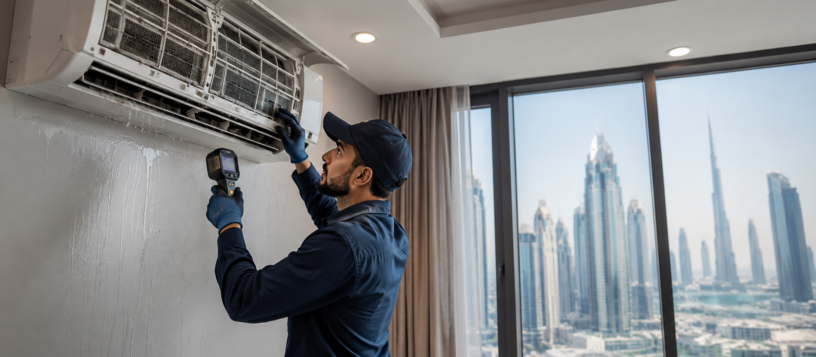
Your AC has been running non-stop since morning, yet by 2 p.m. your living room still feels warm. The outdoor temperature has crossed 45°C, and no matter how low you set the thermostat, the cooling just isn’t keeping up. If this sounds familiar, you’re far from alone. Every summer, thousands of homeowners across Dubai deal with this exact frustration, often without realizing their AC had been warning them for weeks before it finally struggled.
Dubai doesn’t go easy on air conditioning systems. Between the relentless heat, thick dust, and coastal humidity, your unit works harder here than almost anywhere. A small issue that would stay minor in a milder climate can spiral into a full breakdown within days. Here’s the upside: your AC almost always gives warning signs first. Catching them early means avoiding a breakdown during peak heat and dodging an expensive emergency repair. This guide breaks down the ten clearest signs that it’s time for AC maintenance Dubai homes need, plus what to actually do about each one.
Why AC Maintenance Dubai Matters
Dubai’s summers regularly push past 40°C, and AC units in most homes run for 10 to 16 hours a day during peak season. That kind of continuous use puts real strain on compressors, coils, and filters.
Dust is another major factor. Sandstorms and construction activity fill the air with fine particles that settle inside outdoor units and clog filters faster than in cooler, cleaner climates. Meanwhile, coastal areas have high humidity, which can lead to mold inside ducts and indoor units if moisture is not removed properly.
Because of these factors, an AC system in Dubai ages faster without proper care. Regular AC servicing in Dubai isn’t just a nice-to-have. It’s essential for keeping your home comfortable, your energy bills reasonable, and your equipment running for its full lifespan.
1. Your AC Is Not Cooling Properly
The most obvious sign is also the most frustrating one. You set the thermostat to 22°C, but the room stays noticeably warmer no matter how long the unit runs.
This usually points to one of several underlying issues. Low refrigerant levels, a dirty condenser coil, or a failing compressor can all reduce cooling capacity. In some cases, the outdoor unit simply can’t release heat efficiently because dust has built up on its coils.
Ignoring this problem rarely makes it go away. Instead, the compressor keeps working overtime to compensate, which shortens its lifespan and increases the risk of a complete breakdown. A technician performing professional AC maintenance Dubai residents rely on will check refrigerant pressure, inspect the compressor, and clean the coils to restore proper cooling.
2. Airflow Feels Weak
Standing under the vent and feeling very little air is a common problem. Weak airflow is often blamed on the outdoor temperature, but the problem usually comes from inside the unit. A dirty air filter is one of the most common causes. When dust builds up on the filter, it stops enough air from passing through the system. Blocked ducts, a damaged fan motor, or a frozen cooling coil can also make the airflow weaker.
Homes near construction sites or busy roads can collect dust in their filters much faster. If you notice weak airflow, do not wait for the problem to get worse. A maintenance visit can check the system and find out if you only need a new filter or if there is a bigger problem.
3. The AC Blows Warm Air
There’s a difference between weak cooling and warm air coming straight from the vents. If your AC blows air that feels barely cooler than room temperature, something is seriously wrong.
This typically signals a refrigerant leak, a broken compressor, or an electrical fault preventing the compressor from starting. Refrigerant leaks are particularly common in older systems where copper lines have developed small cracks over time.
You should never try to add refrigerant yourself. This requires specialized equipment and training, and handling refrigerant improperly can be dangerous. Instead, call a professional who can locate the leak, repair it safely, and recharge the system to the correct level.
4. Strange Noises Start
Every AC system makes some noise, but certain sounds indicate trouble. Grinding, squealing, rattling, or banging noises are not normal, even in older units.
- Grinding or screeching often points to a worn-out motor bearing that needs lubrication or replacement.
- Rattling can mean loose parts, debris caught in the outdoor unit, or a failing fan blade.
- Banging sometimes signals a serious compressor issue that requires immediate attention.
- Clicking that continues after startup may indicate an electrical relay problem.
These noises tend to get worse over time, not better. As a result, what starts as a minor rattle can turn into a costly compressor replacement if left unaddressed. Professional AC maintenance in Dubai includes a thorough inspection of moving parts, which catches these issues before they escalate.
5. Bad Smells Come From the AC
A musty smell usually means mold or mildew has developed inside the ductwork or indoor unit, often due to excess moisture that isn’t draining properly. This is especially common in Dubai’s humid coastal areas.
A burning smell is more urgent and could indicate an electrical issue, such as overheating wires or a failing motor. If you notice this smell, turn off the unit and call a technician right away rather than waiting for scheduled maintenance.
A sweet, chemical smell might suggest a refrigerant leak, since some refrigerants have a faint, sweet odor. Whatever the smell, it’s a clear signal that something inside the system needs inspection. Ignoring odors can lead to poor indoor air quality, which affects everyone in the household, especially those with allergies or respiratory sensitivities.
6. Water Starts Leaking
Finding water pooling near your indoor unit or dripping from the ceiling is a sign that shouldn’t be ignored. AC units naturally produce condensation, but that water should drain away through a dedicated line, not end up on your floor.
A clogged condensate drain line is the most common cause. Algae, dust, and debris can build up inside the drain over time, especially in humid conditions. When the line gets blocked, water backs up and finds another way out, often causing damage to ceilings, walls, or flooring.
A frozen evaporator coil that later thaws can also cause sudden water leaks. Left unresolved, this issue can lead to mold growth and structural damage to your property. A maintenance technician can clear the drain line and check the coil to prevent recurring leaks.
7. Energy Bills Increase Unexpectedly
If your DEWA bill jumps significantly without a matching increase in usage, your AC efficiency has likely dropped. A system working harder to produce the same cooling output consumes considerably more electricity.
Dirty filters, low refrigerant, and worn-out components all force the compressor to run longer and harder. Over time, this inefficiency adds up, and homeowners often don’t notice until they compare bills month over month.
Regular preventive maintenance keeps components clean and properly calibrated, which helps the system run at its intended efficiency. In a city where AC accounts for a large portion of household energy use, catching this early can lead to meaningful savings.
8. The AC Runs Constantly Without Stopping
A healthy AC system cycles on and off as it reaches the set temperature. If your unit runs nonstop, even after the room feels cool, something is preventing it from cycling properly.
This could stem from a faulty thermostat that isn’t reading the temperature accurately, low refrigerant that prevents the system from ever reaching the target temperature, or a unit that’s simply undersized for the space. Continuous operation puts extra wear on the compressor and fan motor.
Similarly, if the outdoor temperature has been especially high, some extra runtime is normal. However, if the pattern continues even during milder weather, it’s worth scheduling an inspection to rule out mechanical issues.
9. Some Rooms Stay Warmer Than Others
Uneven cooling is a common complaint in villas and larger apartments. One bedroom stays comfortably cool while another room a few meters away feels noticeably warmer.
This often traces back to duct issues. Leaky, disconnected, or poorly insulated ducts lose cooled air before it reaches certain rooms. Blocked vents, closed dampers, or an improperly balanced system can also create hot and cold spots throughout a home.
In addition, rooms with more sun exposure or larger windows naturally need more cooling capacity. A technician can assess whether the imbalance comes from ductwork, airflow distribution, or the layout of your home, then recommend the right fix.
10. Breakdowns Happen More Often
Perhaps the clearest warning sign is frequency itself. If you’ve called for repairs two or three times in the past year, your system is telling you it needs more than a quick fix.
Frequent breakdowns usually mean an underlying issue keeps getting patched instead of properly resolved. A technician might fix a symptom during an emergency call without addressing the root cause, especially under time pressure during peak summer months.
This pattern typically points to the need for comprehensive AC inspection in Dubai rather than another isolated repair. A full maintenance visit examines every major component, which helps identify the actual source of recurring problems instead of just treating the latest symptom.
What Causes These AC Problems?
Several common threads run through most of the warning signs above. Understanding them helps explain why regular maintenance matters so much in this region.
- Dust and sand accumulation: Fine particles clog filters, coils, and outdoor units faster than in cleaner climates.
- High humidity: Excess moisture encourages mold growth and drain line blockages.
- Continuous heavy use: Long daily runtimes accelerate wear on compressors, motors, and electrical components.
- Aging refrigerant lines: Older copper lines develop leaks over time, especially in units past 8 to 10 years old.
- Inadequate cleaning schedules: Skipping regular filter changes and coil cleaning allows small issues to compound.
How Dubai Weather Affects AC Systems
Dubai’s climate isn’t just hot. It combines extreme heat, intense sun exposure, airborne dust, and humidity swings depending on proximity to the coast. Together, these factors create conditions that most AC manufacturers didn’t originally design their standard maintenance schedules around.
Outdoor units bear the brunt of this environment. Positioned outside, they’re directly exposed to sun, sand, and heat almost year-round. Coils get coated in fine dust, which reduces their ability to release heat effectively. Meanwhile, indoor units deal with humidity-related condensation and higher demand for continuous operation.
Consequently, AC systems in Dubai typically need more frequent attention than the same systems would require in milder climates. What might be a once-a-year maintenance schedule elsewhere often needs to happen twice a year here.
When Should You Call a Professional?
Not every issue requires an emergency call, but some situations warrant immediate attention rather than waiting for a scheduled visit.
Call a professional right away if you notice a burning smell, water actively leaking near electrical components, complete loss of cooling during extreme heat, or unusual noises accompanied by a burning odor. These situations carry safety risks or the potential for rapid, costly damage.
For less urgent signs, such as slightly weaker airflow or a small increase in energy bills, scheduling a routine visit within the next week or two is usually sufficient. Either way, addressing issues early almost always costs less than waiting for a full breakdown.
What Does Professional AC Maintenance Include?
Understanding what a proper AC maintenance Dubai visit covers helps you know what to expect and evaluate whether a technician is doing thorough work.
| Maintenance Task | Purpose |
| Filter cleaning or replacement | Improves airflow and indoor air quality |
| Coil cleaning (indoor and outdoor) | Restores heat transfer efficiency |
| Refrigerant level check | Ensures proper cooling capacity |
| Drain line inspection and cleaning | Prevents water leaks and mold growth |
| Electrical connection check | Reduces fire risk and prevents sudden failures |
| Thermostat calibration | Prevents noise and mechanical failure |
| Fan motor and bearing inspection | Prevents noise and mechanical failure |
| Duct inspection | Identifies leaks causing uneven cooling |
A thorough professional AC maintenance Dubai service should walk through each of these areas rather than offering a quick surface-level check. If a technician finishes in ten minutes without opening the unit, that’s worth questioning.
How Often Should AC Maintenance Be Done?
Most HVAC professionals recommend that AC maintenance Dubai homeowners follow twice a year, once before the peak summer season begins and again toward the end of it. This schedule accounts for the region’s heavy AC usage and dust exposure.
Homes near construction sites, coastal areas, or with pets may benefit from more frequent filter checks, sometimes monthly. On the other hand, well-maintained systems in cleaner environments with lighter usage might manage with maintenance every six months without issue.
Ultimately, the right frequency depends on your specific situation. A technician can recommend a schedule based on your system’s age, usage patterns, and the environment around your home.
AC Maintenance Checklist
Here’s a practical checklist you can reference before scheduling a service or during a DIY inspection between professional visits:
- Check and clean or replace air filters monthly during peak season.
- Look for visible dust buildup on the outdoor unit and hose it down gently if needed.
- Listen for unusual noises during operation.
- Check for water pooling near the indoor unit.
- Note any changes in cooling performance or airflow strength.
- Compare monthly energy bills for unexpected spikes.
- Ensure vents throughout the home are open and unobstructed.
- Schedule professional AC servicing in Dubai at least twice a year.
How Regular Maintenance Saves Money
Preventive care costs far less than emergency repairs, and the math tends to favor maintenance every time. A routine filter change or coil cleaning costs a small fraction of what a compressor replacement or major refrigerant leak repair typically runs.
Beyond repair costs, an efficient system consumes less electricity. Since AC usage makes up a substantial portion of household energy bills in Dubai, keeping your system running efficiently translates directly into savings on your DEWA bill.
There’s also the lifespan factor. A well-maintained AC system can last significantly longer than one that only gets attention when something breaks. Extending the life of your equipment by even a few years delays the much larger expense of a full system replacement.
DIY Checks vs Professional Maintenance
Homeowners can handle certain basic tasks between professional visits, but other work genuinely requires trained technicians with the right tools and safety knowledge.
Tasks you can reasonably handle yourself:
- Cleaning or replacing accessible air filters
- Wiping visible dust off the outdoor unit’s exterior
- Keeping the area around the outdoor unit clear of debris
- Checking that vents aren’t blocked by furniture or curtains
Tasks that require a professional:
- Refrigerant checks and recharging
- Electrical component inspection and repair
- Coil cleaning inside the unit
- Drain line clearing when standard flushing doesn’t work
- Compressor diagnostics and repair
- Duct inspection and sealing
Attempting electrical or refrigerant work without proper training isn’t just ineffective. It can be genuinely dangerous and may void your equipment’s warranty. Sticking to safe, basic upkeep at home while relying on professionals for technical work strikes the right balance.
Frequently Asked Questions
1. How do I know if my AC needs maintenance or a full repair?
If you notice reduced cooling, unusual noises, or rising bills, start with a maintenance check. A technician can then tell you whether the issue needs a simple fix or a more involved repair.
2. How much does AC maintenance in Dubai cost?
Costs vary based on the service provider, unit type, and scope of work. Routine maintenance is generally far more affordable than emergency repairs or component replacements.
3. Can I clean my AC filter myself?
Yes, cleaning or replacing accessible filters is a task most homeowners can safely handle. Just turn off the unit first and follow the manufacturer’s guidance for your specific model.
4. Why does my AC smell musty after I turn it on?
A musty smell usually indicates mold or mildew inside the ductwork or indoor unit, often caused by trapped moisture. A professional cleaning typically resolves this.
5. How long does a typical AC maintenance visit take?
A thorough visit usually takes between 45 minutes and 90 minutes, depending on the system’s condition and whether any issues need addressing during the visit.
6. Does regular maintenance really extend my AC’s lifespan?
Yes. Consistent care reduces strain on components like the compressor and motor, which helps the system last closer to its full expected lifespan instead of failing early.
7. What’s the best time of year to schedule AC servicing in Dubai?
Late winter or early spring, before temperatures rise significantly, is ideal. A second check toward the end of summer also helps catch any wear from peak usage.
8. Can dirty ducts really affect my energy bill?
Yes. Leaky or dirty ducts force your system to work harder to maintain the set temperature, which increases energy consumption over time.
9. Is it normal for my AC to run all day during summer?
Extended runtime during extreme heat is normal. However, if the unit never cycles off even in milder weather, that pattern suggests an underlying issue worth checking.
10. What happens if I ignore these warning signs?
Ignoring early warning signs typically leads to bigger repairs, higher energy bills, and a shorter system lifespan. Addressing issues early is almost always more cost-effective.
Final Thoughts
Your AC system rarely fails without warning. Whether it’s weaker airflow, a strange smell, or a slowly climbing energy bill, these signs give you a chance to act before a small issue becomes a costly breakdown during peak summer heat.
Given Dubai’s demanding climate, staying proactive with AC maintenance isn’t optional if you want reliable cooling and reasonable energy costs. A twice-yearly maintenance schedule, combined with basic care between visits, goes a long way toward keeping your system efficient and your home comfortable.
If you’ve noticed any of the ten warning signs covered here, don’t wait for a complete breakdown. Scheduling AC maintenance Dubai services now can save you both discomfort and money later, especially before the next heat wave arrives.
