
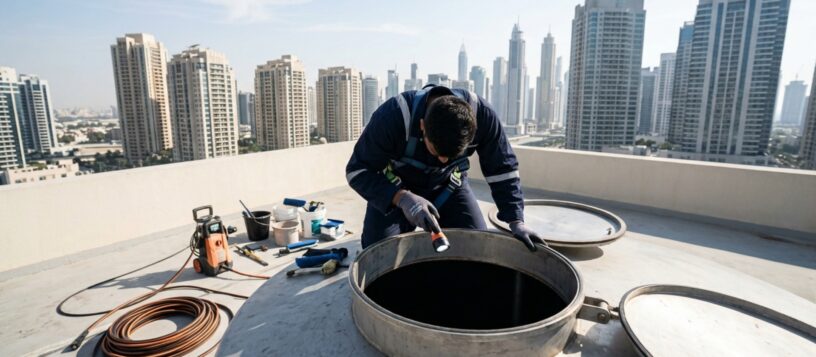
Clean water storage is a basic requirement for every building in Dubai, yet many property owners still underestimate how often their tanks need attention. Residential towers and commercial buildings do not share the same water usage patterns, occupancy levels, or health risks, which means their cleaning schedules should never be identical. Understanding this difference is the first step toward protecting residents, employees, and visitors from contaminated water.
This guide breaks down the correct Water Tank Cleaning Dubai standards for both property types and explains why a one-size-fits-all approach simply does not work.
Why Tank Cleaning Frequency Matters in Dubai
Dubai’s climate plays a major role in how quickly water tanks accumulate sediment, algae, and bacteria. High temperatures speed up microbial growth inside stored water, especially during summer months when tank surfaces heat up rapidly. Dust storms and construction activity across the city also introduce fine particles that settle into water systems through poorly sealed inlets.
Building age, tank material, and water source all influence how fast contamination builds up. A tank left uncleaned for too long can develop biofilm on its inner walls, creating a breeding ground for harmful organisms. This is why Dubai Municipality has set clear expectations for property owners regarding tank maintenance intervals, and why ignoring these guidelines can lead to serious health and legal consequences.
Residential Tower Water Tank Cleaning Requirements
Residential towers in Dubai house families, children, and elderly residents who are more vulnerable to waterborne illnesses. Because of this, residential tank cleaning demands consistent attention regardless of how “clean” the water appears on the surface.
Recommended Cleaning Interval for Residential Buildings
Most residential towers should schedule tank cleaning every three to four months. This interval accounts for daily household usage, which includes cooking, bathing, laundry, and drinking water, all of which increase the risk of contamination over time. Buildings with larger populations or older plumbing infrastructure may need cleaning even more frequently to stay within safe limits.
Why Residential Tanks Need Extra Care
Family members spend significant time at home, meaning exposure to unclean water is constant rather than occasional. Children and elderly residents have weaker immunity, making them more susceptible to gastrointestinal issues linked to poor water quality. Regular residential tank cleaning reduces these risks while also extending the lifespan of plumbing fixtures and appliances that rely on clean water flow.
Commercial Building Water Tank Cleaning Requirements
Commercial buildings operate under different pressures. Office towers, malls, hotels, and hospitals often have higher daily water consumption, larger tank capacities, and stricter compliance obligations tied to their business licenses.
Recommended Cleaning Interval for Commercial Properties
Commercial tank cleaning is typically required every two to three months, particularly in buildings with food service areas, healthcare facilities, or high foot traffic. Hotels and hospitals must maintain tighter schedules because water quality directly affects guest safety and patient care. Office buildings with moderate usage can often follow a slightly longer interval, provided routine inspections show no signs of contamination.
Compliance and Business Impact
Commercial properties face additional scrutiny from health inspectors and municipal authorities. A failed inspection due to poor water tank hygiene can result in fines, temporary closures, or reputational damage that affects tenant retention. This makes a documented tank cleaning schedule not just a health measure but a business necessity for commercial property managers across Dubai.
Key Differences Between Residential and Commercial Tank Cleaning
Both property types require regular maintenance, but the approach differs in scale, urgency, and documentation. Commercial buildings usually need shorter intervals due to higher water turnover and stricter regulatory oversight, while residential towers focus more on protecting long-term resident health through consistent, predictable scheduling.
Tank size also plays a role in how cleaning is planned. Commercial properties often have multiple large tanks feeding different sections of a building, requiring coordinated cleaning to avoid water supply interruptions. Residential towers, by comparison, usually manage a single main tank system, making scheduling simpler but no less important.
How Tank Location Affects Cleaning Needs
Where a tank sits within a building changes how quickly it collects dirt and how difficult cleaning becomes. Rooftop tanks face direct sun exposure, which speeds up algae growth inside the tank walls during Dubai’s hot months. Underground tanks stay cooler but often collect more sediment from ground-level dust and construction runoff nearby.
Buildings with tanks in hard-to-reach spots sometimes delay cleaning simply due to access difficulty, which raises contamination risk over time. Choosing a provider with the right equipment for tight or elevated spaces keeps the cleaning schedule on track regardless of tank placement.
The Role of Water Testing in Tank Maintenance
Water testing works alongside a regular tank cleaning schedule rather than replacing it. Testing between cleanings helps property owners catch early signs of contamination before residents or employees notice a problem. This is especially useful in commercial buildings where water quality issues can affect many people at once.
Basic tests check for bacteria levels, pH balance, and mineral content, giving a clear picture of tank condition. Combining scheduled cleaning with periodic testing offers stronger protection than relying on cleaning intervals alone, particularly for older buildings with aging plumbing systems.
Factors That Affect Tank Cleaning Schedule
Several variables determine whether a building needs more frequent servicing than the general recommendation. Water source quality is one major factor, since buildings relying on desalinated water may experience different mineral buildup compared to those using groundwater sources. Tank material matters as well, with older concrete tanks generally requiring more attention than modern stainless steel or fiberglass alternatives.
Occupancy levels directly affect how quickly a tank cleaning schedule should be adjusted. A building running below capacity may extend intervals slightly, while a fully occupied tower should stick closely to standard recommendations. Environmental exposure, including proximity to construction sites or industrial areas, can also accelerate contamination and shorten safe cleaning windows.
Signs Your Water Tank Needs Immediate Cleaning
Certain warning signs indicate that a tank cannot wait for its next scheduled cleaning and needs urgent attention.
- Water coming from taps has a noticeable odor or unusual color
- Sediment or particles are visible when water is left standing in a glass
- Water pressure has dropped without any known plumbing issue
- Residents or employees report stomach discomfort after consuming tap water
- The tank has not been cleaned in over four months despite regular use
- Visible algae growth appears near the tank’s inspection openings
Ignoring these signs increases health risks and often leads to more expensive remediation later. Acting early keeps both residential and commercial properties compliant with Dubai Water Tank Cleaning standards.
Water Tank Cleaning Cost: Residential vs Commercial Buildings in Dubai
Water tank cleaning costs in Dubai vary significantly based on property type and tank size. Residential buildings, such as villas and apartments, typically have smaller tanks and pay lower rates, as the cleaning process involves less time and fewer resources. Commercial properties, including hotels, offices, and industrial facilities, often have larger tanks with complex plumbing systems, which increases both labor and equipment costs. Additionally, commercial spaces may require more frequent servicing due to higher water consumption, further impacting the overall price. Choosing a professional water tank cleaning service ensures accurate pricing based on our property’s specific needs.
Seasonal Impact on Water Tank Cleaning Frequency in Dubai
Dubai’s extreme summer temperatures accelerate bacterial growth and algae formation inside water tanks, making frequent cleaning essential during hotter months. As temperatures rise, stored water becomes more vulnerable to contamination, posing health risks to residents and employees. In contrast, cooler winter months see a natural slowdown in bacterial activity, allowing for slightly longer intervals between cleanings. However, dust storms and seasonal humidity can still affect water quality year-round. Adjusting our cleaning schedule based on Dubai’s climate patterns helps maintain a consistently safe and hygienic water supply.
How Tank Size Affects Cleaning Schedule for Towers and Commercial Properties
- Small tanks (under 5,000 gallons): Require cleaning every 3–4 months due to faster contaminant buildup relative to water volume
- Medium tanks (5,000–15,000 gallons): Typically need servicing every 4–6 months, depending on usage and occupancy levels
- Large tanks (15,000+ gallons): Found in towers and commercial buildings, these often follow a 6-month cleaning cycle but need monitoring for sediment buildup
- High-rise towers: Multiple interconnected tanks may require staggered cleaning schedules to maintain uninterrupted water supply
- Commercial complexes: Higher water demand from multiple units means larger tanks should be inspected monthly, even if full cleaning isn’t due
- Custom scheduling: Property managers should base cleaning frequency on tank capacity, occupancy, and water usage patterns rather than a fixed timeline
Common Mistakes Property Owners Make with Tank Cleaning
Many property owners assume a tank is safe simply because water looks clear, overlooking the fact that harmful bacteria are invisible to the naked eye. This assumption often leads to skipped cleanings and unnecessary health risks.
Another common mistake is relying on unlicensed or inexperienced providers to save on cost, which can result in incomplete cleaning or damage to tank components. Some buildings also fail to keep cleaning records, leaving them unprepared during municipal inspections despite having actually completed the work.
Dubai Municipality Guidelines for Water Tank Hygiene
Dubai Municipality has established clear expectations for tank maintenance across all building types. Property owners are expected to maintain documented cleaning records, use licensed service providers, and conduct water quality testing after each cleaning cycle. These requirements exist to protect public health and ensure consistent water tank hygiene citywide.
Buildings found non-compliant during random inspections may face penalties, making it essential for property managers to keep cleaning schedules updated and accessible. Working with a certified provider ensures documentation meets municipal standards without added administrative burden on building staff.
Choosing a Professional Water Tank Cleaning Service
Selecting the right service provider makes a significant difference in cleaning quality and long-term tank health. A reliable Water Tank Cleaning Dubai provider should use approved cleaning chemicals, follow proper disinfection procedures, and offer transparent reporting after every service visit.
Experience with both residential and commercial properties is valuable, since each setting requires different equipment and scheduling flexibility. Property owners should also confirm that their chosen provider offers water quality testing as part of the service, giving clear proof that the tank meets safety standards after cleaning.
At Gulf Maintenance, our team understands the specific demands of Dubai’s residential and commercial buildings. We tailor every tank cleaning schedule to match occupancy levels, building type, and municipal compliance requirements, ensuring clients never have to guess when their next service is due.
Building a Long-Term Tank Cleaning Schedule
Rather than treating tank cleaning as a reactive task, property owners benefit most from a proactive, calendar-based approach. Setting reminders based on the recommended intervals for residential or commercial tank cleaning removes guesswork and prevents missed cycles. Pairing this schedule with periodic water testing between full cleanings adds another layer of protection against unexpected contamination.
Working with the same trusted provider over time also creates consistency, since the team becomes familiar with a building’s specific tank configuration and history. This long-term relationship often results in faster service, better record-keeping, and fewer surprises during municipal inspections.
FAQs About Water Tank Cleaning Dubai
How often should residential water tanks be cleaned in Dubai?
Residential towers should schedule tank cleaning every three to four months to maintain safe water quality for residents.
Do commercial buildings need more frequent tank cleaning than residential towers?
Yes, commercial buildings typically require cleaning every two to three months due to higher water usage and stricter compliance obligations.
What happens if a building skips its tank cleaning schedule?
Skipping scheduled cleanings increases contamination risk and may result in fines or penalties during municipal inspections.
Can I tell if my tank needs cleaning without professional testing?
Signs like unusual odor, discoloration, low water pressure, or visible sediment often indicate that cleaning is overdue.
Does Dubai Municipality require documented proof of tank cleaning?
Yes, property owners must maintain cleaning records and use licensed providers to remain compliant with local hygiene regulations.
Conclusion
Water tank cleaning frequency should never be treated as a fixed rule that applies equally to every property. Residential towers need consistent attention to protect families and vulnerable residents, while commercial buildings require shorter intervals due to higher usage and stricter compliance demands. Understanding these differences allows property owners to build a realistic tank cleaning schedule that keeps water safe, avoids penalties, and supports long-term building health.
Partnering with an experienced Water Tank Cleaning Dubai provider like Gulf Maintenance ensures both residential and commercial properties stay compliant, hygienic, and protected throughout the year.
